Under a Spell
The road to marriage churns up an unusual conundrum: What happens when you fall for the matchmaker—not the match?
January 12, 2012
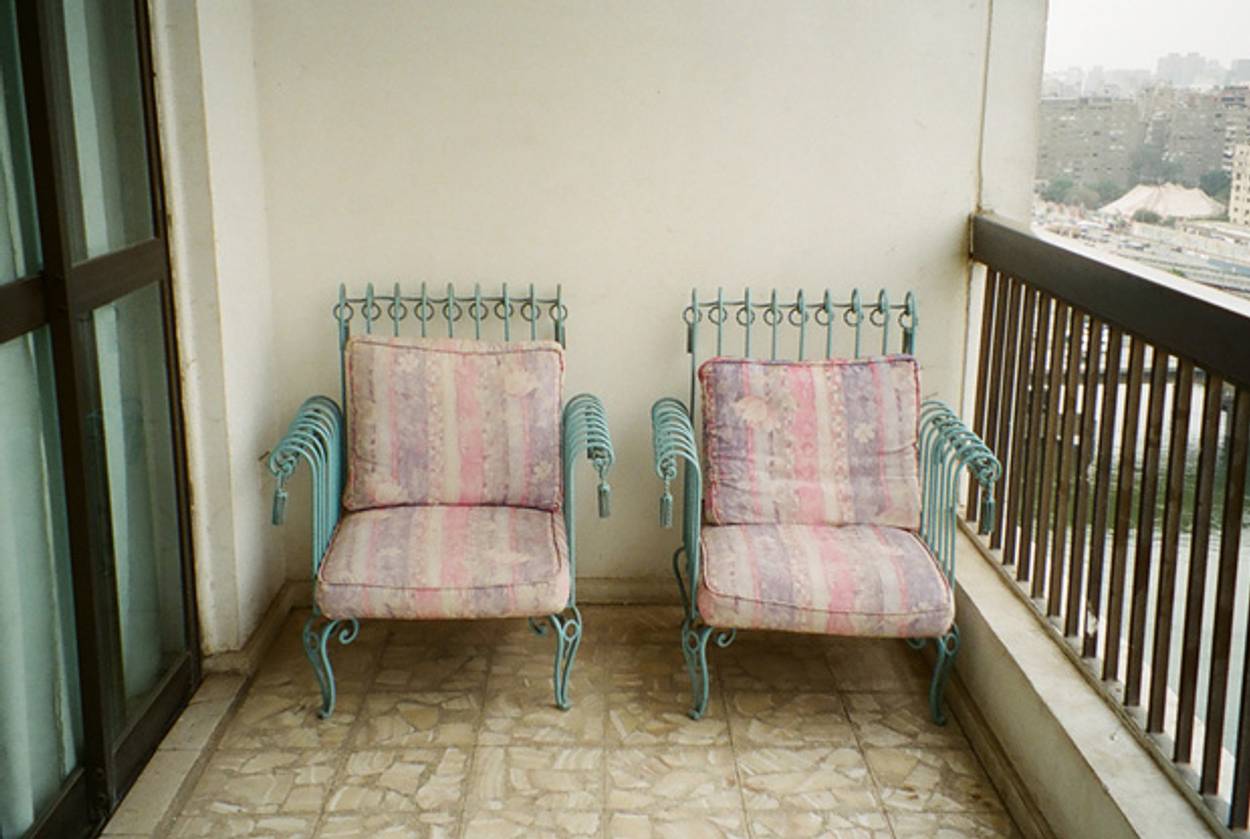
(Yulia Sanchez/Flickr)

When the matchmaker said she had a poet-rabbi for me to meet, I ran over.
Malka, who lived on my block, had previously set me up on blind dates—shidduchim, as they’re called in our Jerusalem circles—and in the process had come to understand my affinity for creative, spiritual men. We sat down at her kitchen table and she sorted through adzuki beans as she told me about the guy.
At first, it didn’t sound too probable. He was from another Middle Eastern country, and I hailed from Nashville-Norfolk-Maryland. Eight years before, at the age of 17, I’d bought a one-way ticket to Israel and settled there. My own parents’ multicultural marriage had exploded, and I wasn’t eager to repeat that awful scenario. Also, the man in question was not exactly a rabbi, but studying to become one; in fact, he had only become religious two years earlier—a ba’al t’shuvah—which was another strike against him. In my dating experience, the newly religious could really get under my skin with their earnestness. Also, he was 33, eight years older than me.
Noticing my skepticism, the matchmaker revealed her trump card. He is, she said, “critically acclaimed”—dropping some glittering Israeli literati who had blurbed his last book—“and has a play showing right now in Tel-Aviv, something he wrote in his former secular days.”
“Really?” I perked up. “What’s it called?”
Malka, a fellow American, didn’t know, then added: “He won’t see it because it’s too racy.” I burst out laughing. Surely, even God had to appreciate the irony of someone who’d boycott his own creations.
Still, I hesitated.
“Well?” said the matchmaker, a ladleful of zucchini soup poised over earthen bowls. I wanted to please her—and I wanted some of that soup—so I said yes.
***
On our first date I was struck by the man’s brilliance, warmth, and handsome dark looks. He appeared like some ancient god carved out of Jerusalem stone, manly, thickly bearded, especially compared to all the other pale-faced wispy-bearded Jewish men who were sitting in the same hotel lobby with their own blind dates. A song played loudly, “I’ll Be Watching You,” and became the bass rhythm to our nonstop conversation. I came back with stars and flowers in my eyes, praying he wanted to see me again.
After work the next day, I sat opposite Malka, who placed a hot bowl of millet soup before me, and I waited, my heart on tiptoe, until she revealed that yes, he wanted to see me again—that very night, if possible.
We met at the matchmaker’s. Her two adorable children were sleeping, and Malka’s husband was busy working on a Hasidic book in a different room.
My date entered the living room in a pullover sweater, his shoulders bowed, carrying a slim book of poetry he had written. I squinted: Was this the same man? He appeared smaller, even effeminate, and his hairline appeared to have receded overnight. Also, I saw a single strand of white in his black beard, which reminded me of our age difference. The conversation stumbled and shlepped along, no brilliant jewels anywhere. I kept wishing for music to be playing in the background, like last time.
I couldn’t understand it, I said to Malka later, after he’d gone home. How could one date be so different from the next? “He looked totally different!” I told her, relieved to finally express myself in English. “We had nothing in common!”
There was, Malka explained to me, a Kabbalistic explanation: The first date is hesed—your hearts are open to each other, it’s all joy and love; second date is gevurah—when judgment starts to kick in; the third date is tiferet—hopefully the harmonization of the two.
I wanted to show I was reasonable—and to find out which date was the fluke!—so I said yes. Malka and I headed to the kitchen, where we finished her soup. Before I left, she and her husband shared with me some Torah passages they had been studying. How romantic, I thought.
***
On my third date with the poet-rabbi, our cultural and religious differences really cropped up, and we began to spar. His ideas about religion and politics were dogmatic and utterly unoriginal; he seemed, as I’d feared, like a crazy baal teshuvah.
Just as I was about to write him off, he began to peel an orange for me—slowly, deftly, like the first man in the first garden with the first woman. My heart shot into my throat.
In this yo-yo way, the poet-rabbi and I continued to see each other. During one conversation, he went on an anti-secularist, anti-Zionist, anti-art tirade, and I sat there in surreal silence, wondering if this was how marriages endured—by pretending to go along with each other’s insane ideologies. But then he shyly presented me with a poem he’d written about a flame in search of a wick. The story was about me, and it was beautiful.
After each date, I poured out my conflict to Malka. “I don’t know if this should continue. We come from such different backgrounds. Maybe this will just be a repeat of my parents’ marriage.”
“Could be. Or maybe,” she said, chopping up a butternut squash for supper, “it’s a tikkun—a rectification.” She handed me a sweet potato to peel. “A man needs to feel his ideas can be,” she said, pausing: “received.”
I tried listening to him open-heartedly, taking in his tones even if I had trouble with the content. He seemed to enjoy my new softer stance, but then he pointed out that the top button of my sweater was open—a beige sliver of my collarbone was discernible, an immodesty in his eyes—and I became enraged.
“Why don’t you take my words as a compliment?” he said, disarming me. “I care enough about the way you look to notice and say something.”
I stared at him as we waited for the bus home. His head seemed sunken into his body, making him look dwarf-like. Always his face was shifting. At certain angles he looked primal and on-fire religious in a way that captivated me. At other angles, he reminded me of somebody’s short, goofy, balding uncle. Was I going crazy? I caught my own reflection in a store window and cringed at the taut blankness on my face.
Why didn’t I just drop him? My biggest fear was to be labeled “A Girl Who Doesn’t Want to Get Married,” and in a city where even the trees plot to get you married, that was a grave sin. Already I had five rejected proposals behind me, and I was getting a name, not only with Malka, but, I suspected, with a whole cadre of matchmakers: Hindy, Rebbetzin Leah Rochel, Pedro, Collette, Mindalah, and others. I really did want to get married, I often found myself saying plaintively to Malka. Just sitting in her kitchen, watching her mediate a squabble between her children, listening to her husband play a Hasidic niggun—I would become filled with longing for a family of my own.
Finally, worn out and bewildered, the poet-rabbi and I went to see an elderly kabbalist for advice. After waiting for hours in his courtyard, I barged my way through and knocked on the door. A plump, goateed Sephardic-looking man stuck his head out.
“Are you the rebbe?” I asked tremulously.
“No, the assistant.”
“Can I ask the rebbe a question?” I pleaded.
“The rebbe is sleeping,” he told me, sphinx-like.
Before I lost my chance, I blurted, “I don’t know whether to marry this guy or not.”
The assistant locked in with a penetrating gaze: “Do you want him?”
All thought stopped in my brain; air stood still. Did I want him?
“No,” I said. I looked around me, stunned. Then, “No!” I really didn’t want him. I cared about him, and I thought he was a brilliant poet, but I didn’t want to marry him. I stared at the man, thrilled. “Thank you, thank you so much!”
After breaking the news to my would-be suitor, I took myself to the Western Wall, lay my head against the huge stones and sobbed.
I caught a bus home. I was dreading telling Malka. How I had loved the time I had spent at her home! I soaked up her happy life—how people talked, argued, made up, cooked, and smiled at each other. And now that it had ended with the poet-rabbi, was that part going to end too?
That’s when it hit me: All along I had wanted the matchmaker, not the match. I wanted Malka’s attention, her children, her cozy apartment, her soulful husband, her millet soup, her whole darn life. I had been willing to give up a lot for so little—just some attention and normalcy. I’d been under a matchmaker’s spell.
Ruchama Feuerman is the author of the novel In the Courtyard of the Kabbalist, and just recently The Mountain Jews and the Mirror, a children’s folktale about the Jews of Casablanca.
Ruchama Feuerman is the author of the novel In the Courtyard of the Kabbalist, and just recently The Mountain Jews and the Mirror, a children’s folktale about the Jews of Casablanca.