Who Shall Live
Reporter Dara Horn admires Varian Fry, who saved Jewish intellectuals from the Nazis, but she questions his belief that not all lives held equal value
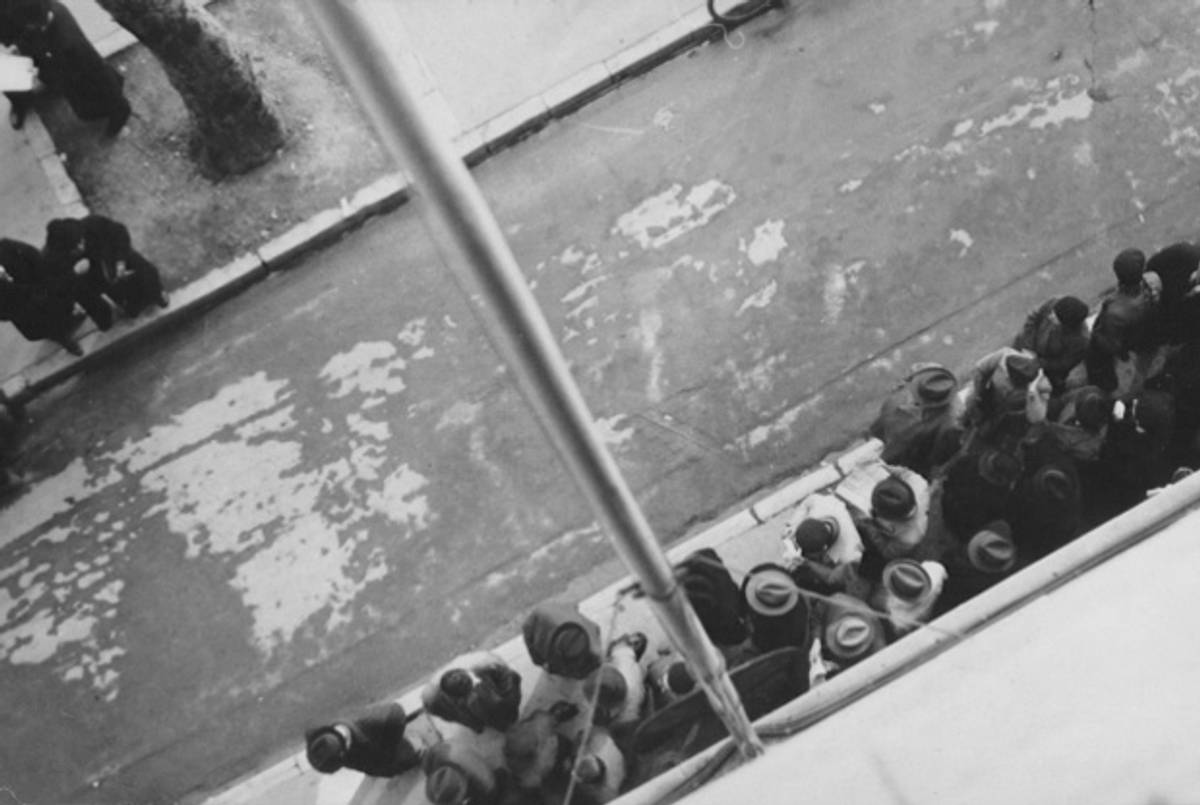
When Varian Fry, an American journalist, went to Europe in 1941 on behalf of the Emergency Rescue Committee, he went with a mission: to save a group of European artists and intellectuals from the Nazis. His endeavor succeeded. With the help of a small team, he rescued Hannah Arendt, Marc Chagall, and more than 2,200 others. But at a time when Oskar Schindler and Raul Wallenberg are familiar names, Fry has been largely forgotten.
Journalist Dara Horn was determined to tell his story. In a revelatory Kindle Single published today by Tablet Magazine, Horn reports on how Fry came to his rescue work and what became of him after the war. (You can read a preview on Tablet.) But how did this hero decide whom to save in the first place? Horn spoke to Vox Tablet host Sara Ivy about Fry’s exploits, the arguably eugenics-like nature of his mission, the cultural heritage that was not protected by his and other rescue missions, and why so few know of his heroic work. [Running time: 22:09]
Your browser does not support the audio element.
 Vox TabletSo Long, FarewellAfter 11 years and 500 episodes, Vox Tablet signs off for good
- Vox TabletTanya’s StoryHow a young woman learned the painful lesson that there are times when trying to do what’s ‘right’ can go very, very wrong
- Vox TabletA New Kind of Prayer BookThe Conservative movement’s latest siddur goes way beyond traditional liturgy
- Vox TabletHey, Mister DJ: Put a (Diaspora-Blending, Genre-Bending) Record OnBooty-shaking new music from A-Wa, Sandaraa, and Schizophonia
- Vox TabletWhat’s Free Will Got To Do With It?Especially in election season, we love talking about the moral fiber (or lack thereof) of our candidates. But when it comes to ethics, no man—or woman—is an island.
- Vox TabletBuilders of a New JerusalemIn a new book, Adina Hoffman brings to life three architects who transformed the city in the days of the British Mandate
- Vox TabletBathe in the WatersA radio documentary asks: Is there a way for women to dunk ritually that doesn’t conflict with their feminism?
- Vox TabletBeyond DrakeA handful of personalities come to mind when we think of African-American Jews. Let’s change that.
- Vox TabletThe Saddlemaker, the Schindler, and the Miller of WlodowaGolems, messiahs, tradesmen, Nazis, and townspeople converge in the story collection ‘In the Land of Armadillos’
- Vox TabletA Year of FirstsAn audio portrait of Luzer Twersky, just after he quit his life as a Hasid, and long before he played one in films
- Vox TabletFor the Love of Suzie Louise: A Christmas StoryIn middle-century Skokie, a young Jewish boy searches for a stolen Jesus to comfort his bereft Christian girlfriend
- Vox TabletThe Most Haunted Leading ManIn ‘Son of Saul,’ actor Géza Röhrig defies our every expectation of a Holocaust movie hero
- Vox TabletGirlhood, InterruptedCynthia Kaplan Shamash fled Iraq 40-odd years ago, when she was just a kid. Her flight foreshadowed that of young refugees fleeing Syria now. Where did she land? Where will they?
- Vox TabletLet ‘Freedom’ Ring: A Flutist Gives Life to Musical Celebrations of LiberationsMimi Stillman’s new album features works inspired by upheaval in Europe and the Middle East
- Vox TabletPuzzle MasterFor years, scholars dismissed the Arabic on text fragments from Cairo’s genizah as unimportant scribbling. Then along came Marina Rustow, bona fide ‘genius.’
- Vox TabletMy Grandfather, the Secret PolicemanRita Gabis knew only that her mother’s Catholic family came from Lithuania after the Holocaust. Then she started asking hard questions.
- Vox TabletBeyond the PulpitWhat does a rabbi do in late August when he no longer needs to prep for High Holidays?
- Vox TabletAndré Aciman, Sarah Wildman, and Others Build a Summer Reading ListLooking for a good book to sink into at the beach in these waning dog days? Friends share what they’ve loved lately.