Overtime

The second day of some Jewish holidays is mandated by rabbinic tradition, not Torah law. In today’s world, they’re increasingly hard to observe.

(Margarita Korol)

Margy Horowitz, a 37-year-old mother of two whom I know, is a private piano teacher in Los Angeles. She is an Orthodox Jew, as are about a third of her students. Paid per lesson, she forgoes up to $300 of income on each day she can’t teach. And in the fall, when Rosh Hashanah ushers in a month-long series of multiday holidays, that adds up: seven missed workdays in just over three weeks, if no holidays fall on a weekend. “The income I lose,” Horowitz said, “is an entire month’s rent.”

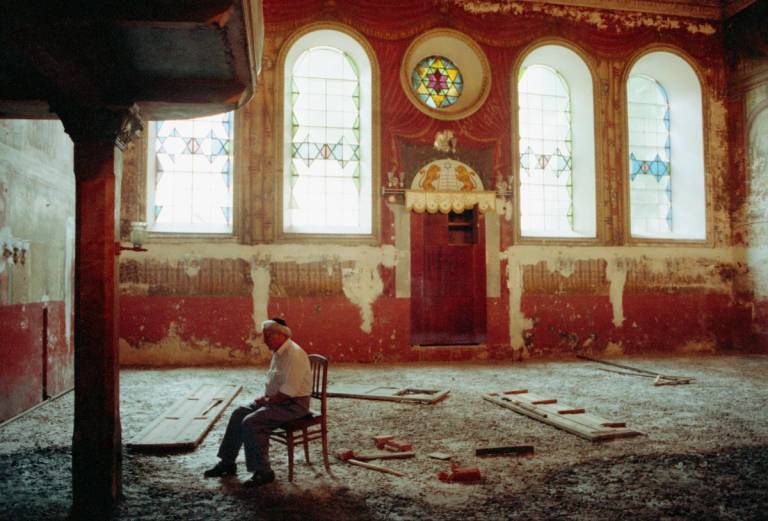
Observant Jews cannot work for two days on Rosh Hashanah, which this year starts tonight. Then eight days later there’s Yom Kippur, two days of Sukkot five days after that, and two days of Simchat Torah another week after that. What’s most troubling for people like Horowitz is that this financial hardship is twice as bad as it needs to be: Only one day of the two-day holidays—yom tov, in Hebrew—is mandated by the Torah; the other is rabbinic tradition from another era. Horowitz has thought about teaching on the second day of these two-day holidays, but the rabbis won’t allow it. “If I started working on yom tov, I wouldn’t feel as much like part of the Orthodox community anymore,” she told me.

***

It started as a clerical issue.

Rabbinic Judaism—that is, the Torah as interpreted by the rabbis, and the mainstream form of Judaism for more than a millennium—follows a lunar calendar. After the destruction of the Second Temple, but before the establishment of a formal calendar, Jews who had left Israel for Babylon, Egypt, and Rome needed to be informed of the new month. This happened via smoke signal or messenger dispatched from Jerusalem, depending on where you lived. Once the start of the month had been determined, you’d know when the holidays would take place. (more…)

Freegan Cool

In this week’s “Tell Me,” Tablet Magazine’s illustrated question-and-answer column, we spend Passover with the royal family—and engage in a little Dumpster diving

Tell Me, page 1

Sundown: Behind Enemy Lines

Plus the man who gave us Passover Coke, and more

A tell-tale yellow Coca-Cola cap.(mhaithaca/Flickr)

The Scroll will be dark Monday and Tuesday, the final two days of Passover.

• Despite a formal Palestinian Authority ban on the practice, 14.2 percent of employed West Bank Palestinians work in settlements—where, on average, they are paid twice as much. [JPost]

• The assassination of Juliano Mer-Khamis, the Palestinian-Israeli theater director and political activist, was almost certainly motivated by his art, not his politics. [Guardian]

• Tuvia Geffen: Brilliant rabbi, prescient anti-Nazi crusader, proud Jewish advocate … and the man responsible for the annual miracle that is kosher-for-Passover Coca-Cola. Great piece. [NYT]

• A fascinating history of the Likud Party. Its prime ministers—Menachem Begin, Yitzhak Shamir, Benjamin Netanyahu, and Ariel Sharon—have ended up enacting consequential policies that contradict the party’s maximalist ideology. Will the trend continue with today’s Likud PM? [Jewish Ideas Daily]

• Tablet Magazine contributor Justin Vogt reports from New Orleans on how David Simon’s Treme is imitating life—in the form of Simon’s clash with NOLA’s mayor. [Slate]

• Is Syria’s nuclear program still going strong? [TNR]

• At this point, according to experienced negotiator Aaron David Miller, the peace process is, literally, all talk. [Foreign Policy]

• Alfred M. Freedman, a psychologist who was critical to reversing the paradigm that treated homosexuality as a mental illness, died at 94. [NYT]

• Arsonists burned a synagogue on the Greek island of Corfu. [JPost]

Happy Good Friday and Easter to all our Christian readers. Here is one of our own with a tribute to, er, another one of our own:

Further Reflections on Passover

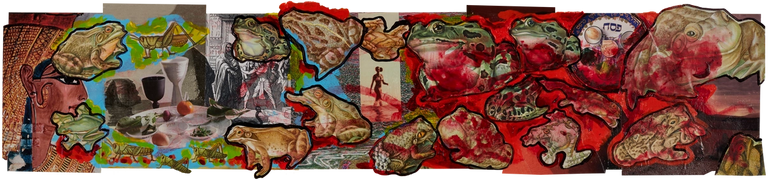
Pharoah the innocent, the tactics of frog-bombing, and more

President Obama at his traditional intimate Seder last Monday.(White House)

Passover: It ain’t over yet! Here are some great articles that have come over the transom in the past week or so. For all of Tablet Magazine’s coverage, go here.

• What the Obamas ate, complete with recipes (including contributing editor Joan Nathan’s Moroccan charoset truffles). [White House]

• Blowtorch-wielding rabbis! Making a kitchen K for P is hardcore. [WSJ]

• Passover forces the Jewish thirtysomething (in this case, the great Dahlia Lithwick) to wonder: Who should lead the Seder? Resultant, deeper questions ensue. [Slate]

• Is Pharoah correctly perceived as a villain? #slatepitches [Slate]

• The Passover story’s lessons for contemporary military strategy and theory. This is cool. [Danger Room]

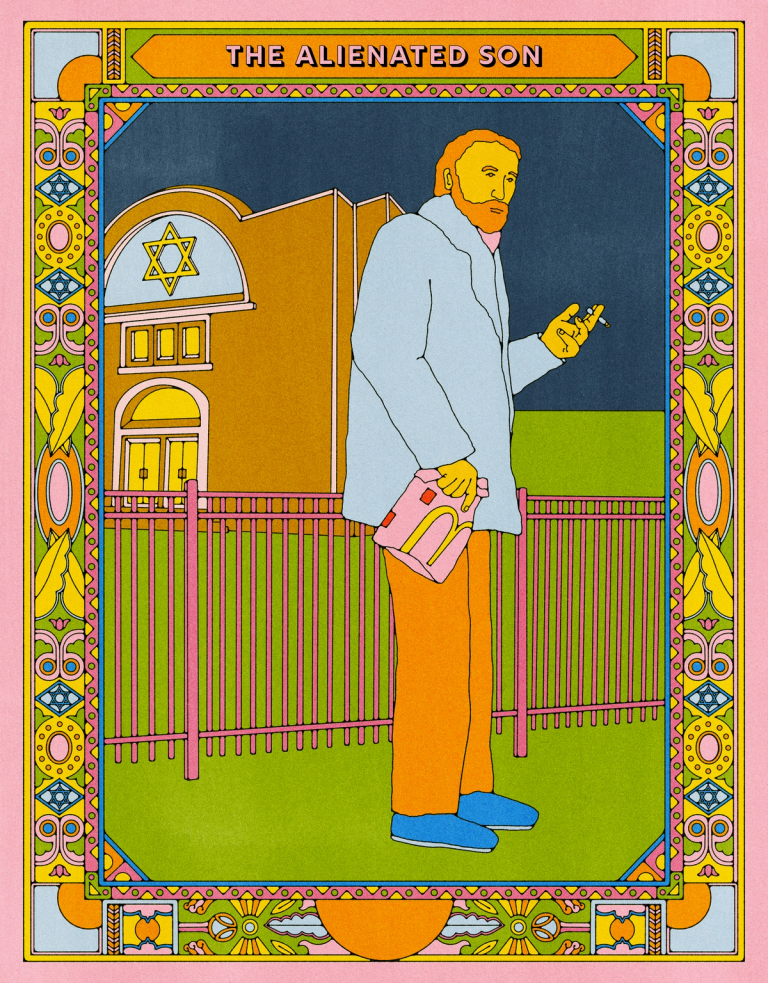
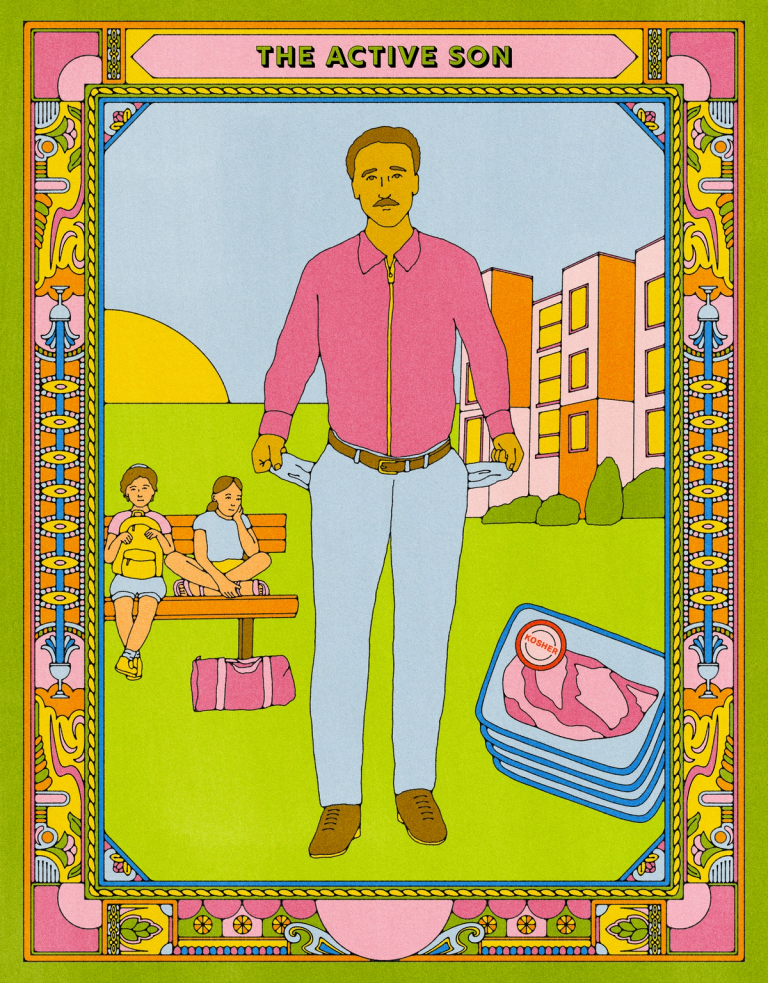
• The pedagogy behind the Four Sons. [GothamSchools]

• A dispatch from the Kinky Jews Passover Seder. “Kinky” actually turns out to be an understatement. [Unorthodox Gymnastics]

• From last year, quite possibly my favorite post I’ve ever written on The Scroll. [The Scroll]

Free Verse

To celebrate the overlap of Passover and National Poetry Month, poets Andrea Cohen, Robert Pinsky, and Mark Levine offer some selections on the themes of liberation, ritual, journeying, and food

(Abigail Miller/Tablet Magazine)

The alleged cruelty of April is mitigated, for some people anyway, by the arrival of two things: Passover and National Poetry Month. To celebrate this collision of good fortune, Vox Tablet asked some poets to share works that engage the themes of the holiday. Andrea Cohen, author most recently of Kentucky Derby, Robert Pinsky, author of The Life of David from Nextbook Press and the newly published Selected Poems, and Mark Levine, whose most recent collection is The Wilds, share some poems and speak about them with Vox Tablet host Sara Ivry. [Running time: 16:22.] 

Exodus

The flat bread
that scratched

our throats
was not symbolic.

We left too quickly
to bring the symbols.

Neither did the bread
portend of manna.

It was bread.
We left

with the skin
on our backs,

with the imprint
of whips.

The symbols
came after,

finding us the way
a lost dog,

crossing deserts,
pinpoints the master

who can’t
live without him.

—Andrea Cohen

Macaroons

I get it now.
You’re dead.
You can’t do
everything
you used to.
Reruns instead
of new episodes.
I get it.
You can’t send
macaroons this Passover,
those dense confections
without flour, conforming
to the rules
of kashrut, the rules
of engagement, which
in the case of our people,
involved fleeing, trading
slavery for the desert.
The land of milk & honey
was a kind of paint-
by-numbers kit
everybody lugged
in his head through
sandy ditches. It’s
best not to commit
directions to Nirvana
to paper: they could be
stolen or confiscated, or
worse: the place itself
obliterated. Forty
years is a long time
to get where you’re going.
Where are you promised?
In the end you spoke
of a boat ride, of
booking passage second-
class, on a vessel that lacked
a rudder, an engine, a sail.
Kaput, you said.
You were looking
for a solution.
Why now? someone
asked—less question
than demand. You
had to go. I
get it. We prepped
you for a journey,
because the mind
gets stuck on the speed
bumps of Fin, of Finito.
The mind insists
on one more
road, one more hello.
I get it: you won’t
be posting macaroons
this year. No problem,
mom. Just send the recipe.

—Andrea Cohen

Paschal

Easter was the old North
Goddess of the dawn.
She rises daily in the East
And yearly in spring for the great
Paschal candle of the sun.

Her name lingers like a spot
Of gravy in the figured vestment
Of the language of the Britains
As Thor’s and crazed Woden’s
Stain Thursday and Wednesday.

O fellow-patriots loyal to this
Our modern world of high heels,
Vaccination, brain surgery:
May the old Apollonian flayers
And Jovial raptors pass over us—

Those ordainers of suppers
Of encrypted dishes: bitter, unrisen,
Infants as bricks for the taskmaster
Quota. Fruit and nuts ground
In wine to recall the mortar:

On the compass platter, traces
Of the species that devises
The Angel of Death to sail
Over our legible doorpost
Smeared with sacrifice.

—Robert Pinsky, from Gulf Music, (Farrar, Straus, & Giroux, 2007)

Refuge Event

was them in motion
beside the open cart on steel wheels
drawn by a tawny mule in the
modern day having bartered
for cart and animal in
motion beside orchards
bordering the receding town
receding crows on the roof and a boy watching
them above his shovel in his pose
animal poked with a stick
between lurid exhalations and
a finch flicking itself at
gnats in the air
in motion and the crate or cart
mounded with leathers
tools from the workshop
drill press/lathe/iron forms/dyer’s vat
them bartering in syllables
anonymously in August
in wool coats and hats in the
documentary evidence in stiff polished
boots laced high and
unbroken-in
spring rain
had rutted the road
with a gap in motion
in eventual summer
axle needed mending
bucket needed washing
with the wash and the boiling water
(good-bye mother with her bag of wash)
in a surge of details past
slumbering countryside
in a past tense
wing or cargo hold

—Mark Levine, from The Wilds, (University of California Press, 2006)

Trans Siberian

Family recipes traveled from the remote Russian region to Japan, California, and finally Providence, R.I., carrying delicious tastes of the Old Country, including an unusual Passover treat

Siberian chremsel. (Anita Davidson)

Tales of how hard life was in Siberia permeated my early married life. My in-laws, Polish Jews, were lucky enough to have been deported to Siberia during World War II. I listened to their stories of chopping wood in the brutally cold winters, bribing guards with shirts stitched by my mother-in-law, living together in a cramped hut, and, most of all, eating the wretched Siberian food. My mother-in-law, Peshka, used to say that even squirrels wouldn’t eat the food they were given. When I asked about Passover, she said, “Who thought about Passover? All we wanted was a piece of bread.”

I never thought that Jews would voluntarily live in this vast, distant part of Russia that extends from the Ural Mountains to the Pacific Ocean and north beyond the Arctic Circle. But once when I was giving a talk in Providence, R.I., a woman named Eleanor Elbaum quietly approached me. “Would you like some Passover recipes from a Jewish family in Siberia?” she asked. She said her family had lived there for generations.

I had read about Dostoevsky and others being exiled to Siberia, and now I learned the Jewish Siberian story. In 1632 the first Jews were sent there from Lithuania, after being captured during the Russo-Polish war. In the early 19th century Jewish convicts from Moscow landed in Siberia too, sentenced to hard labor. In 1859, after the Crimean War ended, merchant classes of Russian Jews were permitted to settle outside the Pale, and some found their way to Siberia.

The next time I was in Providence, I stopped by Eleanor Elbaum’s brick home on a quiet residential street. She had made a few dishes that were waiting for me on her table. But first we talked.

“My great-grandparents on both sides came to Siberia after the Crimean War in 1859,” she said. “My great-great-grandfather was in the army and when the war ended he was permitted by the czar to move to Siberia from Lithuania.”

Her father, who was born in Ishim, Siberia, and served in World War I, went into the hotel business. He and her mother, who was born in the old Siberian town of Tomsk, married and lived in Vladivostok, Russia’s biggest port on the Pacific side of the country. In 1922, they  took a leg of the Trans-Siberian railroad to Harbin, Manchuria. Manchuria served as an escape route for Russian Jews after the revolution and remained one during World War II.

Elbaum, who was born in 1932 in Harbin and grew up in Japan during the World War II, knows about Siberia primarily through the food she ate as a child. “There was no discussion about Siberia when I was growing up,” she said. “My mother would make piroshky and pelmeni, the Jewish ravioli, and put them outside to freeze. They told me they didn’t need a freezer. They had a sort of igloo outside for the food.” Because it was practically impossible to buy fresh lemons, her mother would use sour salt when making jams and curing meat like brisket. They also ate typical Russian Jewish fare—cucumber and sour cream salad, cabbage rolls stuffed with meat and rice, borscht, kasha, and sauerkraut.

Sharon Hudgins’ wonderful saga, The Other Side of Russia, A Slice of Life in Siberia and the Russian Far East, gives a vivid account of life there in the late 1990s, when she spent several years in the region. “Now it has changed completely,” she told me. “But when I lived there it must have been like it was in the late 19th and early 20th century.” There were few middle men. You would get what little food was available off of farmers’ trucks. The staples were beets, potatoes, cabbage, onions, and leeks; they were kept in root cellars until late in the season. Berries, lemons, and even flour were scarce. They couldn’t count on having sugar either, and if it did appear, it was often laced with impurities.

After a childhood in the Far East, Elbaum—who speaks Russian, English, and Japanese and understands French—made her way to California for college, then to Toronto, where she met her husband, and they eventually settled in Providence. Now she frequents farmers’ markets, where she buys strawberries, cherries, apricots, and blueberries for her jams. When she was a child, these jams constituted dessert, eaten with a spoon and served with tea. Each time Elbaum puts out her canning jars, she spends a few moments remembering her parents and wondering about their life in Siberia.

Whenever she meets Russians they tell her that the best food is in Siberia. “I really don’t know what they have in mind when they say that,” she said. “I just remember that whenever we complained about having something too often, like chicken, my father would remind us to feel lucky to eat chicken. I tried so many times to get my parents to talk about the past. That generation just wiped out segments of their lives.”

As she told me her story, I looked around her house for more on Siberia—artifacts, books—but she there was little. All she had were the stories from her parents and the recipes her mother made.

On her table was a Passover candy she grew up with, a candy made from Siberian nuts and honey, the precursor to our commercial peanut brittle and fruit-and-nut bars. I have seen similar candies in other Jewish homes made with radishes, carrots, and beets; no matter how different the mixture, it always includes honey and ginger. You can also add cranberries, chocolate chips, chopped apricots, whatever you want. I love old recipes like this; they give a hint at what life before the commercialization of so many food products.

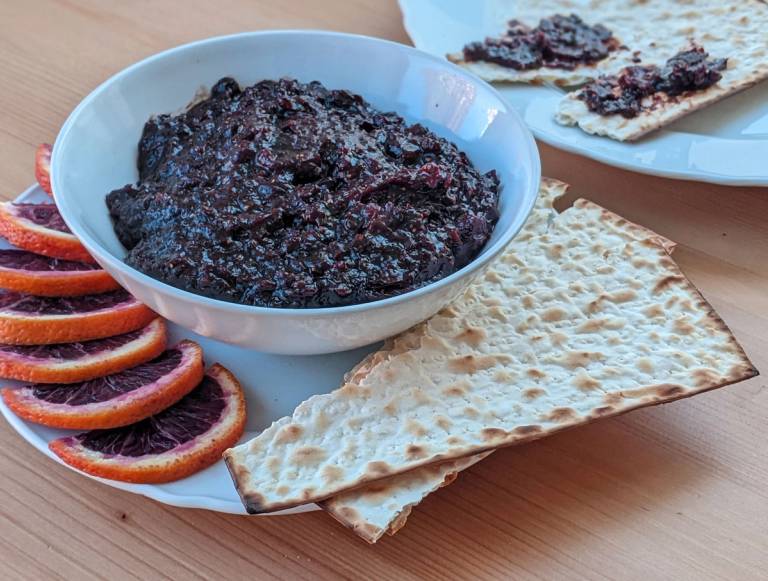
Elbaum served us tea in glasses, and with it she brought out Siberian chremsel. It’s a matzoh fritter of sorts, probably based on a blinchiki, eaten in Siberia and perfect for breakfast during Passover. I have eaten chremsel before, made out of fried potato and matzoh meal and stuffed with meat. I’ve also made a doughnut-like chremsel with nuts that I serve for dessert at Passover. I had never seen one like this before, made from matzoh meal and stuffed with tart blueberry, cranberry, or any other fruit jam, then browned and baked with a little more jam, fresh blueberries or cranberries (it should be a little tart), and honey. It’s delicious—and all the more so for the remarkable journey the recipe took from its birthplace in Siberia (or maybe Lithuania), across Manchuria to Japan, California, Toronto, and then to Providence, Rhode Island.

SIBERIAN CHREMSEL

I recommend making this dish the night before and baking it before breakfast.

1 ¼ cup matzoh meal, about
3 large eggs
5 tablespoons honey
Vegetable spray or oil for frying
1 cup blueberry jam, prune or apricot lekve, or cranberry sauce (you want a little tart and sweet together)
1 cup fresh blueberries or cranberries
1 cup sour cream

1. Bring 1 cup of water to a boil in a saucepan. Put the matzoh meal in the water, remove from the fire, and beat as you would for a gougere or put it in the food processor. Let cool slightly.

2. Beat in or process 1 egg at a time, mashing well to eliminate lumps.

3. Remove  to a bowl, and add 1tablespoon of the honey. Let rest overnight in the refrigerator.

4. Put vegetable spray on your hands and on a board or counter-top. Take a tablespoon of dough and press in your hand into a large circle, keep moving from one hand to the other because it sticks. Put a heaping teaspoon of the jam in the  center. Then, taking a knife, carefully enclose the jam to make a ball, making sure it is completely sealed. As you finish the chremslach, put them on the greased board.

5. Put a little oil or spray a frying pan and heat to medium. Add the chremslach and fry them, adding more oil if needed. Drain on a paper towel and put in a Pyrex pan large enough to hold them in one row.

6. Preheat the oven to 325 degrees and then put ½ cup jam and the blueberries or cranberries, the remaining 4 tablespoons of honey and ¼ cup water in a bowl and mix well. Pour over the chremslach and bake in the oven for 20 minutes. Serve immediately with sour cream on the side.

Yield: about 12 chremslach

NUTS IN HONEY AND SUGAR

¾ cup sugar
5 tablespoons honey
1 teaspoon ground ginger, or to taste
1 pound walnuts, roughly chopped
Matzoh meal for sprinkling

1. Mix the sugar, honey, and ginger together in a large saucepan. When it is bubbling and syrupy, remove from the heat, add the walnuts, and quickly mix to coat the nuts in the syrup.

2. Wet a wooden cutting board slightly to prevent sticking. Spread the nuts on the board in a rectangular shape and use another moistened board to push down on the nuts and pack them tightly. As the bars cool, sprinkle with matzoh meal. Once they’ve cooled, cut bars into 1-inch squares.

Note: The matzoh meal will stop the bars from sticking to each other when stacked for serving.

Yield: about 36 one-inch squares

Joan Nathan is the author of Quiches, Kugels and Couscous: My Search for Jewish Cooking in France, among other books.

Sundown: Adios, Galliano

Plus the Irvine 11, a White House trip, and more

John Galliano last fall.(Pascal Le Segretain/Getty Images)

Happy Passover! The Scroll will be dark until Thursday morning. Enjoy the holiday.

• John Galliano was fired from John Galliano. In other news, Buffalo buffalo Buffalo buffalo buffalo buffalo Buffalo buffalo. [JTA]

• The State Department has been financing Syrian opposition groups, according to cables newly made public by WikiLeaks. [WP]

• Palestinian Christians may have trouble getting to East Jerusalem’s holy sites during Easter. [Babylon & Beyond]

• The Cal-Irvine students being prosecuted for interrupting Israeli Ambassador Michael Oren last year pleaded not guilty to charges of conspiracy to commit a crime and disruption of a meeting. [LAT]

• Tablet Magazine copy editor Siân Gibby discussed her recent article on adapting to Jewish food on The Brian Lehrer Show. [WNYC]

• Forty-first most influential American rabbi Andy Bachman tells of his day at the White House. [Water Over Rocks]

Mmm, Moses.

A Grey Lady Dayenu

It has been quite enough

From the 15th-century Washington Haggadah, with puppy.(NYT)

Had the New York Times merely published an article on Passover iPhone applications the same day Tablet Magazine did, it would have been enough.

Had the Times published an article on Passover apps the same day Tablet did, but not published an article on San Francisco’s Distillery No. 209’s kosher-for-Passover gin a day after Tablet did, it would have been enough.

Had the Times published an article on San Francisco’s Distillery No. 209’s kosher-for-Passover gin a day after Tablet did, but not published an article on the Washington Haggadah exhibit nearly a week after Tablet did, it would have been enough.

Had the Times published an article on the Washington Haggadah exhibit almost a week after Tablet did, but not published an article on the debate over whether quinoa is kosher for Passover several days after Tablet did, it would have been enough.

Anyway, the Times piece on the Washington Haggadah, by Edward Rothstein, is actually quite good—give it some of your time. But if you want a more original Haggadah, you might wish to try the version we put together last year with contributors as diffuse as writer Andre Aciman, boxer Dmitriy Salita, and the artist Andrea Dezsö. Our friends at Nextbook Press have posted an interesting excerpt from its latest book, Sacred Trash, about all the different Haggadot structures found among the papers in the Cairo Geniza. And you can find all of our Passover coverage—some of which covers topics the Times hasn’t even subsequently reported on!—at this one handy page.

iPassover [Tablet Magazine]
To Get Easter and Passover Celebrations Right, Use an App [NYT]
Refill [Tablet Magazine]
Gin and Passover: No Longer Contradictory [NYT]
National Treasure [Tablet Magazine]
Put Yourself in the Story of Passover [NYT]
Off the Table [Tablet Magazine]
For Passover, Quinoa is Popular, But Kosher? [NYT]
The Tablet Haggadah

Daybreak: Fogel Murderers Arrested

Plus ‘Move Over AIPAC’ announced, and more in the news

Helen Thomas, who will be honored at Move Over AIPAC.(Brendan Smialowski/Getty Images)

• Two Palestinian teenagers from a nearby village were arrested for and confessed to last month’s Fogel murders. [NYT]

• Syria’s President Assad declared a number of reforms, including his plan to lift the country’s emergency law, in an address Saturday. Which didn’t stop ample protesting yesterday, “a sound rejection of Mr. Assad’s reform package.”
[NYT]

• Secretary of State Clinton accused Iran of trying to co-opt uprisings throughout the Arab world for its own benefit. [AP/WP]

• The teenager critically injured in the school bus attack near Gaza died. [Haaretz]

• Israel prepared for Passover, including its routine closure of the West Bank. [AP/WP]

• Several leftist groups are planning a “Move Over AIPAC” conference/protest in response to May’s annual AIPAC conference in Washington, D.C. Helen Thomas, Stephen Walt, and John Mearsheimer will speak, which—in all honesty—is pretty damning of Walt and Mearsheimer, no? [JTA]

Passover Perfect

More than any other Jewish holiday, Passover can turn mothers into obsessive control freaks. But if we’re to have a meaningful holiday, we have to resist the madness.

(Barry Schwartz via Flickr.)

A few days ago, Maxine came home from Hebrew school, her face a dark cloud. I found out later she’d spent much of the class sobbing, her face in her hands. Her class had been making matzoh plates from popsicle sticks, Elmer’s glue, and plastic gems. Maxie’s got some motor and sensory issues, and she couldn’t arrange or glue the popsicle sticks properly. She knew what she was supposed to do, and she wanted to do it, but she just couldn’t. Her teacher made her bring home her work, wrapped in aluminum foil, but Maxie wouldn’t let me open the package. “I don’t want to talk about it,” she told me. “I don’t want to look at it. Hide it.”

After she went to bed, I opened the package. I’d seen her friend Rachel’s plate at pickup, so I knew what she was supposed to be making. But instead of a plate, Maxie’s foil package held a jumble of gluey interlaced sticks. It looked like a teepee that had been hit by a tornado.

Maxie is generally the most resilient, least perfectionist member of our family. She’s inherently sunny, a people-pleaser, a kid who compensates for her physical difficulties with tons of goofy humor and sweetness. She loves going to occupational therapy, and she’s eager to keep trying when she has challenges. But this time she was stymied. There was a right answer, one proper way to do the project. She saw herself as a failure. And she was inconsolable.

I couldn’t help seeing a parallel. Passover turns a lot of us into tightly wound loons. There are so many rules, and you can wind up becoming a Jewish Alice, tumbling down a rabbit hole of increasingly twisted and exacting standards. Is the house really as clean as it could be? Is that cheddar cheese really kosher for Passover, or does it have a different designation from last year? Do we do peanuts, which, as Leah Koenig points out, are not actually kitniyot (a category of foodstuffs which Ashkenazi Jews are forbidden from eating on Passover) because they’re a New World food our ancients wouldn’t have known about, but no one will actually certify them kosher for Passover because of tradition? Can we (gasp) buy the freakin’ quinoa? And do I have to unscrew the telephone receiver and clean inside it? Shampoo the furniture? Cover up the artwork in the kitchen with a picture of bread in it? How arcane can we get? As a commenter on Leah’s piece said, “We need a frumkeit Olympics.”

I’m not Queen Machmir (a strict constructionist), but I do get very worked up about the Seder. Since my dad’s death, I’ve led it, and I try to add new songs, poems, and activities every year. I try to incorporate wisdom from my mom, a professor of Jewish education, about making it interactive and engaging for kids. I try to anticipate the children’s questions, even the ones they don’t know to ask. I try to prepare for guests of varying levels of Jewish ritual cluefulness, so everyone will feel welcome. And every Passover at some point I freak out and growl at everybody like Dick Cheney.

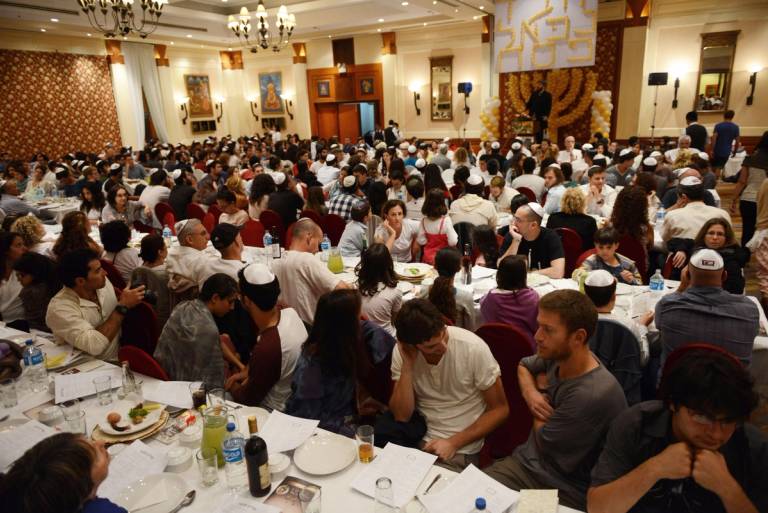
So, I was very taken with rabbi Joanna Samuels’ essay in the Forward a few days ago, sharing her own shpilkes. “I am sure there are two or three families out there who spend hours having rich discussions,” she writes ruefully, “who strike their own right balance of ritual and spontaneity, where there is not a bit of family tension about who is serving and clearing, and where the evening ends with singing all of the songs. That would constitute the Seder shel ma’alah–the heavenly Seder. But what most of us attend is the Seder shel matah—the (decidedly) earthly Seder. Among the features of this Seder are eye-rolling teenagers, exhausted children up way past their bedtimes, relatives whose religious observance or lack of religious observance is a source of tension to other family members.”

She confesses that even though every year she wants to focus less on cooking and cleaning and more on “undertaking projects that result in real freedom for real people,” every year she falls short of that mark. Been there, thought that. The Seder shel ma’alah is the Platonic ideal of a Seder: No child throws an afikomen-related tantrum, everyone engages in the host’s carefully thought-out freedom-and-slavery-related discussions, no one spills Cabernet on the Marimekko tablecloth. Since humans can never actually achieve a Platonic ideal, we have to live with imperfection all the time. And, as Neil Farber at the Medical College of Wisconsin points out, this can be hard. When we compare the real to the ideal we wind up unhappy, because, Farber says,“One, we are being mindless; not focusing or being actively aware of or appreciating the present. Two, We are never going to be as happy with what we have when we compare it to some mental idea of what is perfect.”

Chasing perfection—as Tal Ben-Shahar of the Interdisciplinary Center in Herzliya writes in The Pursuit of Perfect—only leads to unhappiness. Ben-Shahar makes a distinction between what he calls perfectionists and optimalists. Both have high standards, but perfectionists think the perfect is reasonable, and immediately seek someone to blame when (surprise!) it remains elusive. Optimalists, on the other hand, live in the real world. They appreciate that limited success is still success. And when things don’t work out, well, they can sit with their own discomfort rather than immediately trying to assess blame. To an optimalist, failure is part of a learning process; the journey is as valuable as the destination.

It’s a similar idea to Samuels’ reflections on the chasm between shel ma’alah and shel matah, the ideal and the real. “My apartment,” Samuels writes, “will be a work in progress; our Seder there will be a blessing by virtue of everyone being around the table. I will breathe. I will take it all in. And hopefully, I can use some of the energy getting more serious about freedom—to try to see myself, in some limited way, as an agent of change in the world, casting my awareness and my resources on those whose needs for freedom remain unmet.” Amen.

Last night I had Maxie make the cover for our haggadah supplement. I worried she wouldn’t want to after her unsuccessful ritual art experience, so I told her to draw whatever she wanted. She made “a girl in a headband with a rose on it standing next to the Red Sea praying.” Very cute. Then I asked her to write “Our Seder, 2011” on it. Perhaps anxious about her unsteady writing messing up her picture, she refused. I let it go. Drawing the picture was enough—dayenu. We know what year it is and whose Seder it is. That’s optimal.