Halloween 2.0?

Backlash over revealing Purim costumes

Someone else's cat costume.(Yun Yulia/Shutterstock)

Purim, it seems, has become the new Halloween. The World International Zionist Organization has called for parents to boycott companies that sell revealing costumes marketed to young people, specifically naming Shoshi Zohar, a retailer whose 2012 Purim catalog, the Jerusalem Post reports, was deemed inappropriate:

It features 23 colorful pages of costumes for babies, young children and teenagers and seven pages of adult costumes. Of the adult costumes, the majority display various professions, animals or television characters and almost all include fishnet stockings, microscopic skirts and revealing tops.

One of the costumes, described in the catalogue as a “sexy cat,” includes a bondage mask and whip, while the “sexy policewoman” includes a latex bodice and handcuffs.

Zohar argued that her costumes offer options for both religious and secular buyers, but it doesn’t look like WIZO is buying it.

‘Pornographic’ Purim Costumes Cause Uproar [Jerusalem Post]

Sundown: Syria Faces Upheaval

Plus Mrs. God, and more

Pro-regime protesters in Syria. Cool dudes.(-/AFP/Getty Images)

• Unrest in Syria. [WP]

• God had a wife. Yes, that God. [Discovery News]

• Tablet Magazine contributing editor Eddy Portnoy has a children’s treasury of Yiddish fight terms. [Shtetl Montreal]

• Technion-Israel Institute of Technology is interested in a New York City satellite campus. [NYT]

• iGrogger [iTunes]

• Contributing editor Vanessa Davis’s workspace is at least as wonderful as you’d suspect. [From the desk of …]

• The doll that got a bar mitzvah. [The Daily]

According to contributor Jody Rosen, 100 years ago today Irving Berlin—one of the heroes of David Lehman’s A Fine Romance—received a copyright for “Alexander’s Ragtime Band.”

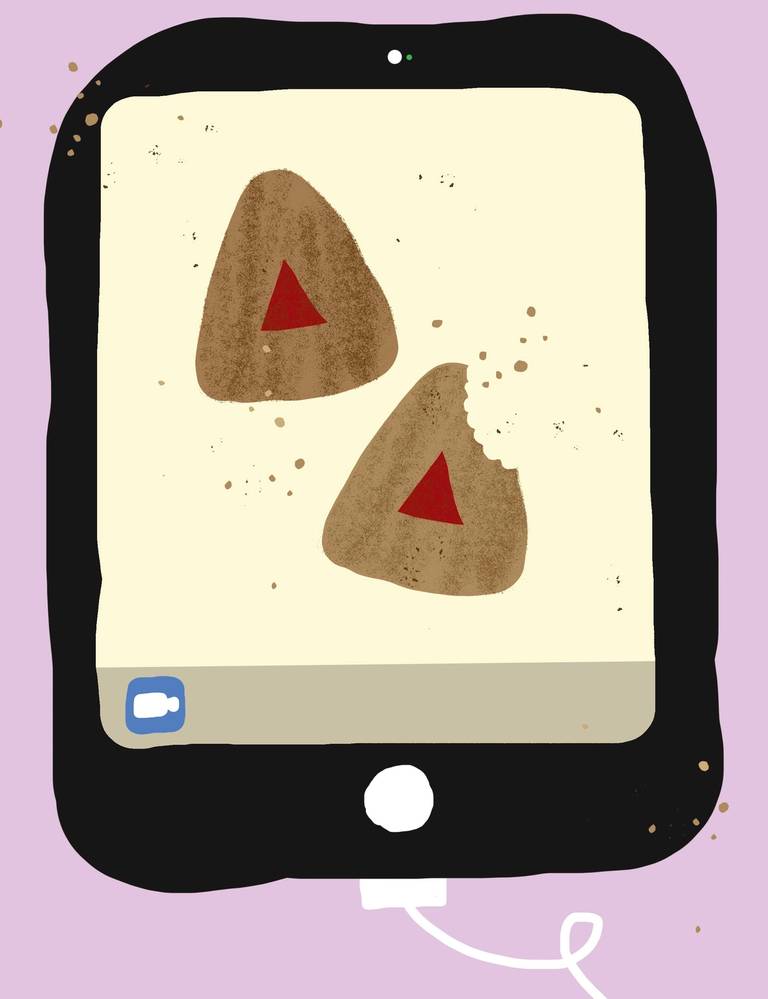
Emperor’s New Costume

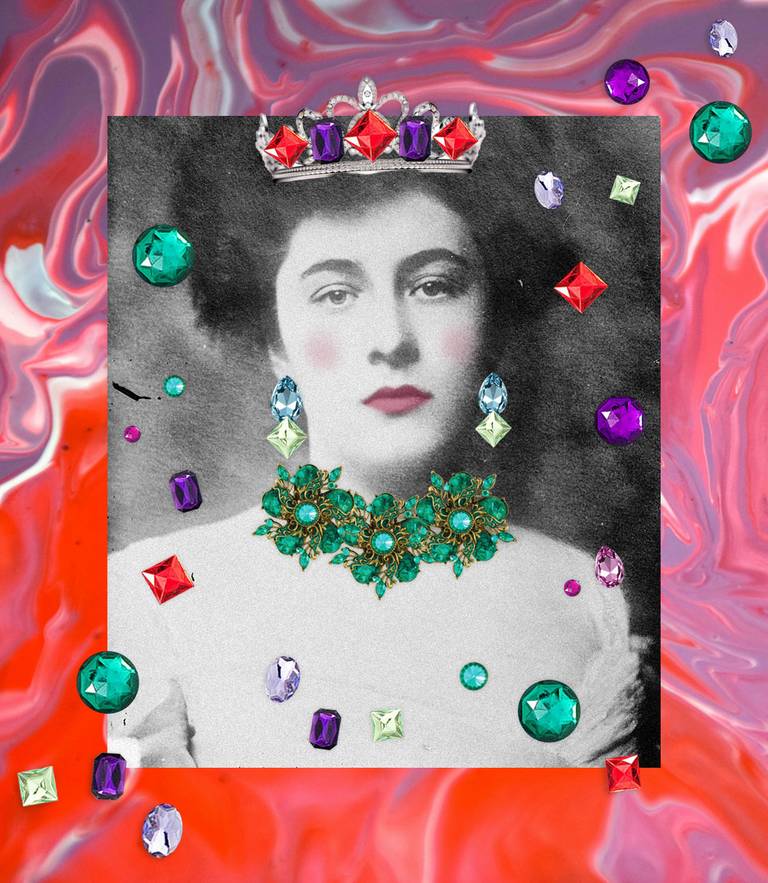
Tablet Magazine’s illustrated column imagines a nudist crestfallen over the fact that he can’t dress up for Purim. Help him fulfill his dream with do-it-yourself cut-outs.

Liana Finck

Purim 2011

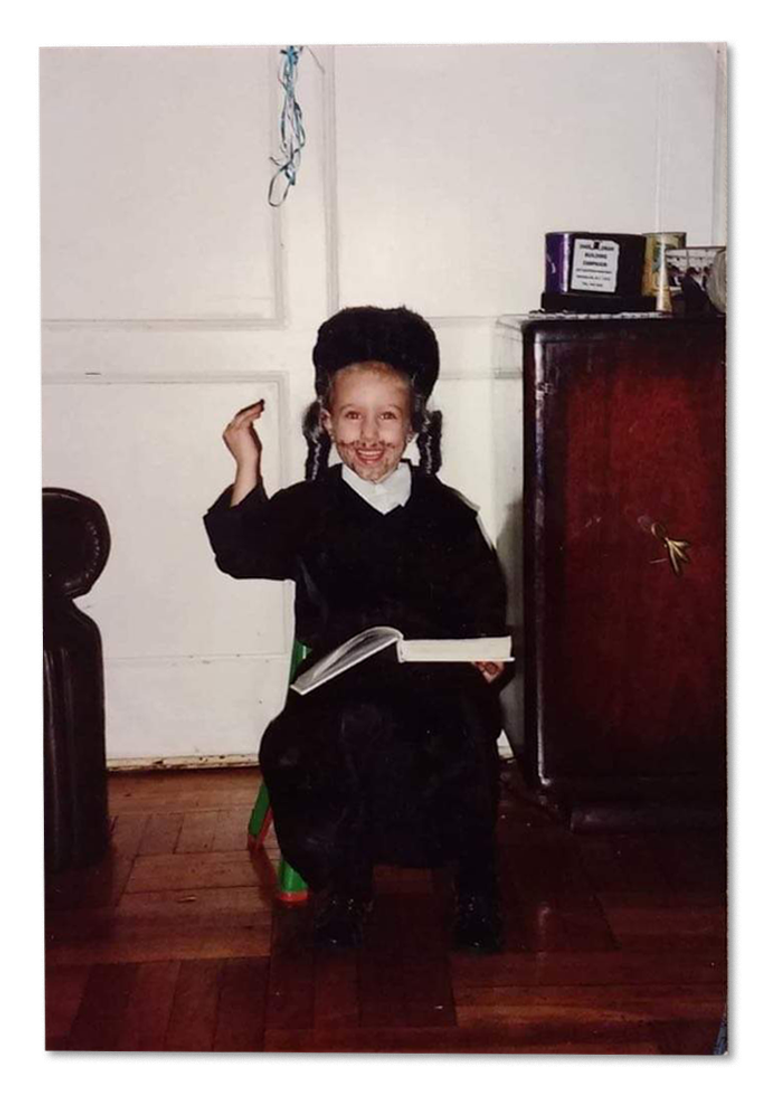
From hamantashen to designer costumes to newfangled groggers—anything and everything you might need to better enjoy the Festival of Lots

(Abigail Miller/Tablet Magazine)

On the Bookshelf: From Hodu to Kush: anticipating Purim with books on Persian food, lust-filled kings, and biblical heroines, by Josh Lambert

Be Happy: We’re commanded to be happy on Purim, and it turns out the acts required for proper observance—from donning costumes to celebrating with others—provide useful tricks for brightening moods year round, by Ilana Kurshan

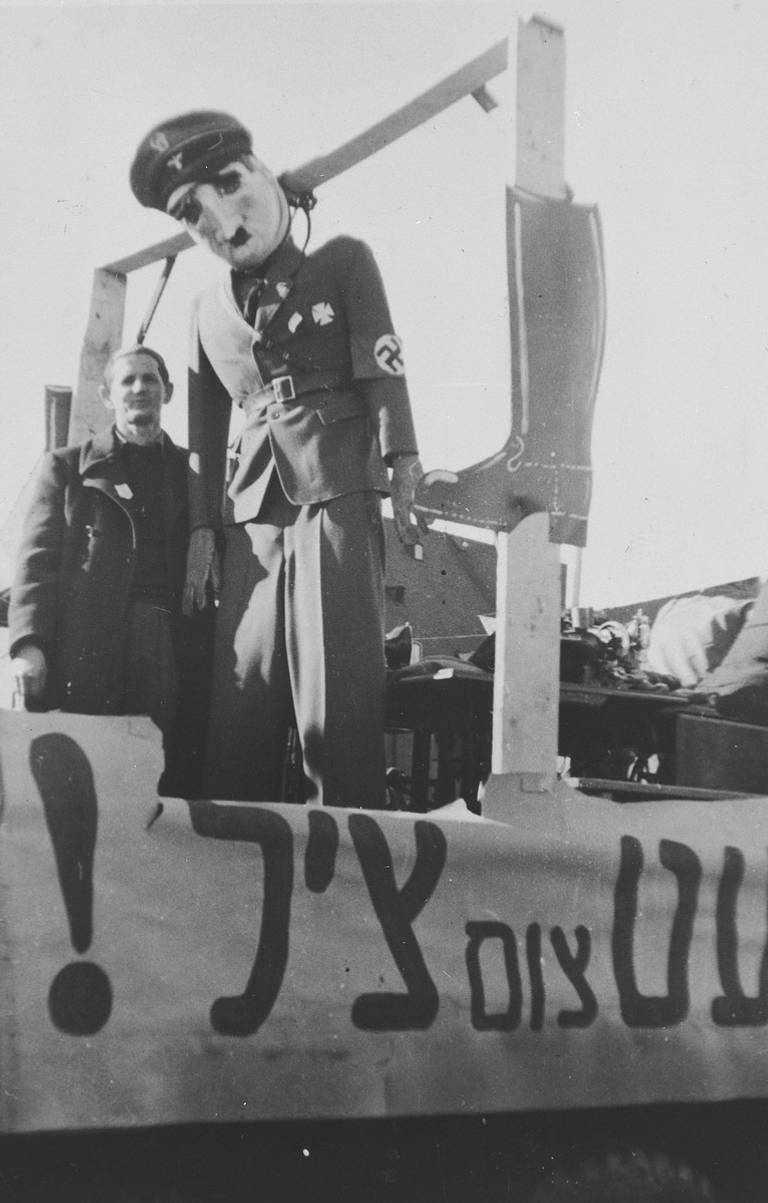
Seriously Groggy: The Purim tradition of drowning out Haman’s name with noise dates back to medieval times. But in our increasingly cacophonous lives, an illustrator wonders: Does the grogger need to be reinvented? By Sarah Lazarovic

Boy, Interrupted,: Purim calls for costumes, and we’re fine with seeing little girls dressed up as boys. But a boy dressed as a girl makes us uncomfortable, thanks to stubborn ideas about gender roles. It shouldn’t. By Marjorie Ingall

Dressed Up: With Purim approaching and a costume in order, seeking sartorial inspiration from the Book of Esther, European paintings, Elizabeth Taylor, and several style gurus, one of whom recommends an edible hat, by Erika Kawalek

Emperor’s New Costume: Tablet Magazine’s illustrated column imagines a nudist crestfallen over the fact that he can’t dress up for Purim. Help him fulfill his dream with do-it-yourself cut-outs. By Liana Finck

Purim FAQ: Everything you ever wanted to know about the story of Esther, by the Editors

Sister in Arms: Playing the defiant Vashti in a day school Purim play awakened my inner feminist, by Elisa Albert

Purimpalooza: The Purim story reset in the kingdom of indie rock, by Vanessa Davis

Unmasked: Has Purim replaced Passover as the best holiday vehicle for expressing individual Jewish identity? By Liel Liebovitz

Top Hamantashen: After a painstaking survey, Tablet Magazine awards title for nation’s tastiest triangular treat, by Jenny Merkin

Be Happy

We’re commanded to be happy on Purim, and it turns out the acts required for proper observance—from donning costumes to celebrating with others—provide useful tricks for brightening moods year round

Purim in Jerusalem. (Marco Longari/AFP/Getty Images)

A lot has been recently written about happiness. Books like Stumbling on Happiness, The Politics of Happiness, and the best-selling The Happiness Project posit that happiness is something that can be attained, albeit with a bit of hard work, if we better understand our own mental processes. It seems that happiness is hip these days, as I could not help noticing when I began preparing for Purim.

“When the month of Adar enters, we increase in happiness,” the Talmud teaches. This slogan appears across Jerusalem, where I live, at this time of year, as many of the city’s storefronts are converted into costume bazaars (pirates, cowboys, fairies, and butterflies—the standard fare) and the stands in the shuk that sold dried fruit for Tu b’shvat now feature mini candy bars and Gummy Everything for inclusion in mishloach manot packages, the baskets of food that are traditionally exchanged on Purim. Walk into any of these shops and you hear the same recording of happy voices singing “Mishenichnas Adar Marbim B’simchah,” (Once Adar begins, we increase in happiness) like the ubiquitous Jingle Bells of American Decembers. Happiness, you might conclude, is about plastic sunglasses and glitter and colorful wigs.

You wouldn’t be entirely wrong: Happiness is indeed about costumes and mishloach manot. Because if Purim is about being happy, then the mitzvot we are obliged to perform on the holiday help teach us how we might stumble upon happiness.

For one, happiness is about community. All the deeds we are commanded to perform on Purim involve other people; they must be done in a communal context. To give gifts to the poor you must put yourself in a situation where you have contact with poor people; to send mishloach manot you must have friends to whom you can send them; to enjoy the festive Seudah, the holiday meal, there must be others with whom to share it; and even the megillah reading is supposed to be read publicly, in synagogue. Sitting alone at home and reading books about happiness is not going to make you happy. But going to shul to hear the megillah just might. The Jewish conception of happiness, as we learn from the mitzvot of Purim, is about surrounding yourself with other people, and involving yourself in their lives.

This is a lesson I was reminded of not long after the start of Adar, when I returned to daf yomi, my daily morning Talmud class, after a two-month hiatus. My tendency is to wake up feeling sad and overwhelmed. I am not a depressed person, but the start of the day always seems to bring with it an awareness of all the tasks that lie ahead, and I wake with the weight of the world on my shoulders. As the day unfolds and I begin to get to work, I tend to get progressively happier, and sometimes in the evenings I am positively giddy—until the next day dawns and the demons are back. But I’ve noticed that returning to daf yomi has had the magical effect of jump-starting my happiness. I love waking up knowing that I have a place to go, and that if I don’t hop out of bed at that very moment, I won’t make it in time. I love arriving at the class and seeing a host of familiar faces who take note of my presence and will wonder if I don’t show up one day. In short, I like starting my day as part of a community. Perhaps this is why we are supposed to pray with a minyan every morning—to remind ourselves, first thing, that we are part of something larger than ourselves. And perhaps this is why all the major mitzvot of Purim, the happiness holiday, must be performed in the presence of others.

The customs of Purim, too, offer lessons in being happy. On Purim we dress in costume so that we do not look or feel like ourselves. Sometimes, part of being happy is forgetting who we are or tricking ourselves into thinking that we can be somebody or something else. This custom reflects the awareness that it is difficult to make ourselves happy unless we can, at least in part, forget ourselves. This is surely what lies behind the custom of drinking alcohol—it is a desire to shed some of our inhibitions and our painful self-awareness. Purim reminds us that happiness is just sadness dressed in borrowed robes. We wear painted clown masks over our furrowed brows and can’t help smiling as we see our friends in their own silly disguises. Perhaps this is why Keats invokes the image of the veil to describe the close kinship between happiness and melancholy: “Ay, in the very temple of Delight/ Veil’d Melancholy has her sovran shrine.” Delight is just veiled melancholy, and Purim is the day we put on the veil and peer out at the world through it.

Purim, though, is not the only occasion for happiness in Judaism. The Torah also speaks of happiness in the context of the festival of Sukkot, where we are told V’samachta b’chagecha v’hayita ach sameach. And you shall be happy on your festivals, and you shall be surely happy (Deuteronomy 16:14-15). I read the words “surely happy” as suggesting that we have to be happy even in spite of ourselves. We must be happy on demand, like the bright yellow “Don’t worry be happy” bumper stickers. But as we know, emotions cannot be mandated—we cannot force ourselves to feel a certain way. And so it seems that in the Torah, happiness is not a feeling but rather a way of acting. “V’hayita ach sameach”—you must surely act happy! Because to act happy is to be happy, in spite of, ach, how you might otherwise feel.

I have tried, over the years, to internalize this Jewish concept of happiness. No matter how sad I am feeling, I always dance up a storm on Simchat Torah. I am convinced that if I circle just a bit faster, I’ll be so dizzy that I’ll manage to lose my bearings entirely. On Purim, too, I force myself to come up with ridiculously obscure costumes to delight my fellow Talmud-learning friends, even if the last thing I want to do on that day is dress up (or even get dressed at all). I regularly smile and act cheerful and try to greet everyone I meet with a sunny disposition, regardless of how I am feeling inside. It is, to some extent, an act, but I don’t think it’s disingenuous. I am aware that I stand the best chance for being happy if I act like a happy person.

On Purim we are commanded to take this to an extreme. We act a certain way and, in so doing, we transform our emotional state. This process of acting as a means to feeling reminds me of the Talmudic midrash about how God held Mount Sinai over the heads of the Israelites like a bucket until they accepted Torah.

“And they stood at the foot of the mountain” (Exodus 19:17). In the Tractate Shabbat, Rav Avdimi bar Chama bar Chasa says: This teaches that God forced the mountain over them like a bucket, and said to them: If you accept the Torah, very well; and if not, this mountain will be your grave. … Rava said: Even so, they upheld accepted it upon themselves in the days of Achashverosh. That is, when the Jews were standing at the foot of Mount Sinai poised to receive the Torah, God threatened them by holding the mountain over their heads, so that the Jews had no choice but to receive it. It was only on Purim that they accepted Torah out of their own free will.

Torah, like happiness, was not easy to take on. The Jews accepted happiness under coercion, much as we “force” ourselves, through our observance of the mitzvot of Purim, to act happy. But the end result was that by Purim, the Jews found themselves accepting Torah out of their own volition. So too may we find ourselves, on Purim, surprised by joy—dancing to a rhythm we didn’t know we had, joking with people we wouldn’t have presumed to claim as friends. For those whose natural tendency is to go about the world somber and heavy with the weight of the world, Purim looms overhead like a very scary mountain indeed. For this one day alone, let us wear that mountain on our heads like a clown hat, casting our lots with those who are off making merry.

Ilana Kurshan works in book publishing and teaches Torah in Jerusalem.

Seriously Groggy

The Purim tradition of drowning out Haman’s name with noise dates back to medieval times. But in our increasingly cacophonous lives, an illustrator wonders: Does the grogger need to be reinvented?

Sarah Lararovic

Sundown: Weapons Came from Iran

Plus Sheen wins with Israelis, a Yiddisheh workout, and more

A weapon recovered from the Gaza-bound ship.(IDF/Flickr)

• Prime Minister Netanyahu said that the weapons seized aboard a Gaza-bound ship this morning (see pictures here) came from Iran via Syria. [Haaretz]

• Charlie Sheen needed bodyguards. Naturally, he hired ex-IDFers. [JTA]

• Leo Steinberg, a hugely important art historian, died at 90. [NYT]

• French Jews rallied against Marine Le Pen and her father, National Front leader Jean-Marie Le Pen, in Paris after a radio station planned (and then canceled) an interview with her. [JTA]

• The best cocktails for Purim. [Jewcy]

• The American town of 20,000 people or more with the largest percentage of its population under the age of 15 is the Hasidic enclave of Kiryas Joel in upstate New York. [Business Week]

Here is a lovely dispatch from the burial of Shifra Lerer, a onetime star of the Yiddish stage, who died Saturday at 95. In 1996, she satirized Jane Fonda in “Shvitz! My Yiddisheh Workout.”

Boy, Interrupted

Purim calls for costumes, and we’re fine with seeing little girls dressed up as boys. But a boy dressed as a girl makes us uncomfortable, thanks to stubborn ideas about gender roles. It shouldn’t.

(ohsohappytogether/Flickr)

My favorite Purim costume was Pharaoh. (Don’t fence me in with your narrow isolationist notions of confining oneself to villains of the Persian Empire.) My uncle Michael had given my mom a gorgeous gold-and-turquoise robe with navy embroidery around the neckline; it became my default dress-up outfit. Occasionally, I was Haman, because I enjoyed drawing a twirly mustache on my upper lip with an eyeliner pencil.

While most little girls see the megillah reading as an opportunity to bust out the Disney Princess garb, there are always a handful who get a kick out of being Haman, the way I did. But on Purim this year, which arrives Saturday night, there are likely to be very few, if any, little boys dressed as Esther.

Why? Because when little girls dress “boyishly,” everyone thinks it’s cute. I adored putting baby Josie and baby Maxie in Osh-Kosh engineer overalls and teensy black Converse high tops. If I’d had sons, would I have put them in pink onesies and glittery parachute pants?

Yet many parents do have what Sarah Hoffman, a Jewish writer who blogs pseudonymously, calls “Pink Boys.” (It’s the title of her forthcoming book). Whether a kid is growing up in Berkeleyest Berkeley, Calif., or in Hasidic Williamsburg, Brooklyn, the urge to be fabulous isn’t something entirely within the parents’ control. “Gender identity isn’t something we just impose on kids and expect them to suck it up, like eating vegetables or going to school,” Hoffman writes. “It’s part of who they are, whether that satisfies us as parents or not.” Sometimes, little boys who love dresses grow up to be gay. Sometimes they’re transgender. And sometimes a pretty dress is just a pretty dress. Parents needn’t jump to any assumptions about what a little boy’s love of tulle means, but they should listen to and respect the individual child’s desires.

“Don’t get ahead of yourself,” said Julie Holland, an assistant professor of psychiatry at the NYU School of Medicine. “The important thing is not to induce shame in your kid. It’s essential that kids feel they are OK, that they are loved and lovable.She offered advice to parents whose sons want to wear dresses to school. “You can say, ‘In our culture, many people think that only girls should like pink, and that’s kind of silly. They think some toys and outfits are ‘boyish’ and some are ‘girlish.’ How do you think people will respond if you wear the dress to school?”

The trick is balancing your child’s safety with his or her self-expression. You have to find this balance without letting your own gender-issue mishegas get in the way and without making your kid feel judged and wrong. If your child’s teacher is supportive, the school is a nurturing place, and your son’s passion for silk charmeuse is implacable, why not let the kid wear a freakin’ dress? The issue, of course, is if the school environment isn’t supportive. “You don’t want to hurt him, and you don’t want the world to hurt him,” said Holland. “Which means the ultimate solution is to change the world, not your kid.”

That means if your kid really wants to wear dresses, you find allies within the school community to protect your child. If the kid is experiencing regular bullying, it may mean finding another school or homeschooling. “The path isn’t easy,” Holland added. “But your job as a parent is to, as much as you can, create a safe space for your kid.”

There has conveniently been a boomlet in children’s books about boys in dresses. I can think of four books published in the last year alone that address this issue. 10,000 Dresses, by Marcus Ewert, gorgeously illustrated by Rex Ray, is the story of a child named Bailey who looks like a boy but knows she is a girl inside. She dreams of wearing brilliant dresses made of crystals, rainbows, flowers, and windows, but her family refuses to acknowledge her true self. Ultimately she does find a supportive friend. Unfortunately, I think this book would baffle most little kids: Its use of pronouns is very confusing for kids who view the world in binary ways—the omniscient narrator assumes that the reader understands that Bailey is a she, despite looking like a he, but most kids won’t make that leap. The pictures are gorgeous, though, and I can see older children who are already familiar with transgender issues really loving the book. (Also fun: the blurb by fashion-designing Jew Isaac Mizrahi: “I love this book! If I had read it growing up, I might have felt better about my dress-wearing habit!”)

Then there’s Be Who You Are by Jennifer Carr, illustrated by Ben Rumback, a picture book based on the author’s own parenting experience raising a transgender child. And My Princess Boy by Cheryl Kilodavis, illustrated by Suzanne DeSimone, the story of a little boy named Dyson who likes to wear a tiara sometimes and jeans sometimes. Kids may be turned off by the illustrations, depicting people without faces (each character has a blank oval where the face should be, perhaps so everyone can project herself into the tale, but I think it just looks creepy). The book, by a mom who had a harder time than Carr in coming to terms with her child’s identity, pleads:

If you see a Princess Boy…
Will you laugh at him?
Will you call him a name?
Will you play with him?
Will you like him for who he is?

The one middle-grade novel in the bunch is The Boy in the Dress by David Walliams, a comedian who I am told is super-famous in England. The sweet, stylish spot illustrations are by Quentin Blake. The main character, 12-year-old Dennis, is a soccer-mad boy who loves to read Vogue and gradually admits to himself that he wants to wear dresses. The most popular, most gorgeous girl in school, on whom Dennis has a crush, befriends him and encourages him. There’s a lot of goofy, broad physical comedy (very British) and an ending that was, for me, too unrealistically rosy. But Josie, my 9-year-old, went crazy for the book, reading it over and over. I realized that for Jo, a child with an acute awareness of injustice, the book was a perfect fairy tale. She loved the ending precisely because it would never happen in the real world. What I saw as weakness she saw as wonderful.

Alternatively, as you consider the issue of dressing up—or cross-dressing-up—this Purim, you could always turn to our sages for advice. Deuteronomy may include a prohibition against a man wearing women’s clothes, but Rashi wrote that this kind of dress is wrong only when it leads to adultery, and Maimonides added that cross-dressing is wrong when it is for the purpose of idol worship. To these wise rabbis, the prohibition is against cross-dressing in order to do harm. If harm’s not the goal, as Rabbi Elliot Kukla and Reuben Zellman point out, quoting the Babylonian Talmud: “v’ein kan toevah”—there is no abomination here.

Will the world become more tolerant of boys in dresses? Holland offered a surprising analogy. “Until recently, peanut allergy wasn’t taken seriously,” she said. “Now every school has a policy, and everyone accommodates it. But parents had to educate people about the special needs of their sensitive kids. I’m not comparing cross-dressing to allergies. I’m just saying with education, change is possible.” And maybe that means one day we’ll see a lot more little boy Esthers.

Dressed Up

With Purim approaching and a costume in order, seeking sartorial inspiration from the Book of Esther, European paintings, Elizabeth Taylor, and several style gurus, one of whom recommends an edible hat

(Sharon G./Flickr)

For Purim this year, which arrives on Saturday night, I wanted a costume inspired by the events and characters of the story itself.

But there’s not much textual guidance. The Book of Esther opens with a description of a feast. It tells of white cotton and royal-blue wool wall hangings embroidered with cords of fine linen and purple wool, suspended over silver rods and marble pillars. There are gold and silver couches on platforms of green, white, shell, and onyx marble. When Queen Vashti, King Ahasuerus’ first wife, refuses to come to the banquet when summoned, Ahasuerus banishes her. After that, the Purim story is all plot, no scenery. With the exception of the royal finery that Mordecai, Esther’s uncle, will don for his parade—a line about blue and purple robes and a large gold crown—there is no visual information to go on.

Looking for inspiration, I rang Susan Handler, co-owner of Manhattan’s Creative Costume, which rents costumes for theater and film and to the general public. “No, we don’t really have Purim,” Handler said. “Nobody asks for Purim. People come in for Purim and want in general what everybody wants.” What in general do people want? “Today I just did a Purim couple: a mermaid and king Neptune.” Frankie Steinz, the owner of the eponymous costume shop in Manhattan, concurred: “Nobody wants Purim—we do things like fruit bowls and refrigerators and movie stars,” she said, adding that typically Purim is a time for theme parties, just not 6th-century-BCE Shushan-theme parties.

I thought I’d turn to movies, but it turns out unless you want be a Raoul Walsh-ian Middle-Eastern siren (such as Joan Collins in Esther and the King or Elizabeth Taylor in Cleopatra), there’s not much to go with.

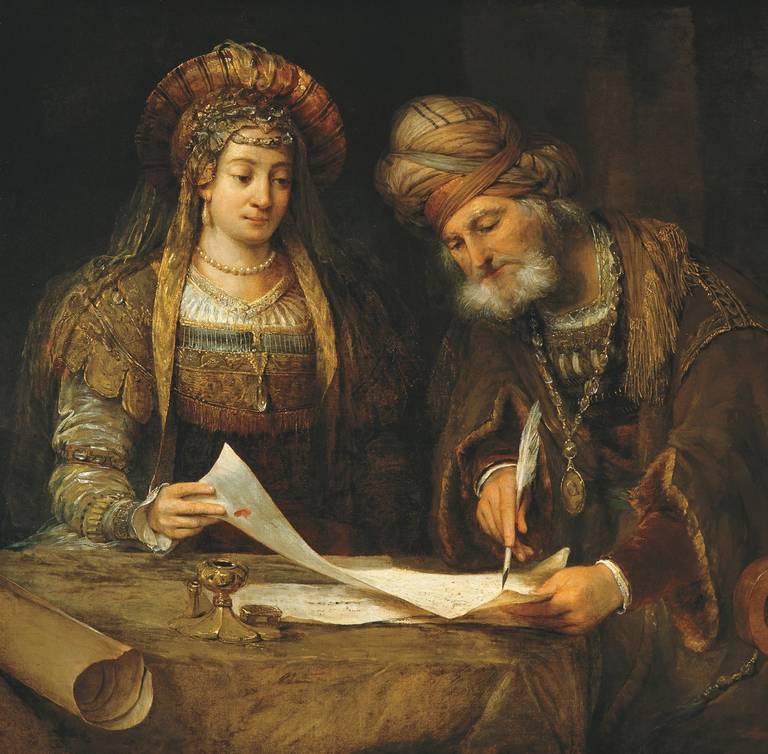
Finally, I looked to fine art and hit the jackpot. Painters have depicted nearly every scene of the Purim tale. Not only does Western art offer interpretations of Shushan garb from 1650s through the 1890s, but many of the looks are easy to approximate from stuff you could grab from your or your grandmother’s closet. Ernest Normand’s portrait Vashti Deposed, from the late 19th century, reveals the banished queen wrapped in an indigo robe, her black hair falling over her face, lying in a commodious bed. It’s an affecting look—and easy to replicate. For the more risqué, there’s a blonde Esther in Theodore Chasseriau’s La Toilette d’Esther, from 1841, in which our heroine is naked but for a piece of white fabric draped across her waist, a gold necklace, and bangles.

The Purim scene that garnered the most painterly attention is Esther appearing before king Ahasuerus. Poussin’s Esther Before Assuerus (1640), Batoni’s Esther Before Ahasuerus (1740), and Lefevre’s Esther Before Ahasuerus (1675) each contain solid blocks of colorful cloaks, which my eye gravitated toward. Sir John Everett Millais’ 19th-century Esther is a magnificent portrait of a red-haired queen in contemplation, wearing a loose canary-yellow robe with splotches of color. (Millais used an authentic Chinese Qing-dynasty robe turned inside-out for Esther’s gown, I discovered: There’s a great idea.) I made my decision: I would try my hand at just such a Purim cloak, a simple no-sew affair.

I called Mood Fabrics, of Project Runway fame, located in New York’s Garment District. The clerk assured me that making a cloak and dyeing it to my specifications would be easy. “Dyes work best on natural fibers like cotton or silk or wool,” she explained. “Your best bet would be cotton, but for more weight go for wool.” An adult-sized cloak requires 4 to 5 yards of fabric, one for a small child, 2 to 3.

On the Rit dye website I found a neat color chart that indicates precise color recipes. Esther’s robe by Millais? That would be Yellow 2 #61: “1/4 Tsp Rose Pink, 1 Tbs Lemon Yellow and 1 Cup water.” Batoni’s pink and pea-green Ahasuerus is a cinch to match, as are Poussin’s courtiers in blazing orange and cobalt blue.

It seemed so easy, I wanted to do more. And what about crowns and accessories? I called Ellen Christine Colon-Lugo, a New York milliner whose confections are sold at Bendel’s and the shop of Metropolitan Opera and have appeared in publications like Elle and Vogue. She suggested investing in a turban. “They are in right now, and it’s a good excuse to buy one,” she said. “You can stick feathers in a turban, or pin on broaches.” She suggested visiting a South Asian emporium for a costume. “Indian shirts, the embroidered or mirrored ones, the cotton ones with shiny dots are a good choice, and Sari fabric is also great.”

Jessica Harris, a buyer at the Wasteland, a popular vintage shop on Los Angeles’ Melrose Avenue, suggested keeping it simple. “You can buy some fabric and add jewels,” she said. “Tie a bunch of different scarves together to make a cape or stoles and visit a crafts store—there are tons of ideas there for fabric decorations.”

Sandy Schreier, a private collector of haute couture and Hollywood costumes (she owns Rita Hayworth’s gown from Gilda), hesitated to offer Purim costume advice—at first. “I am not a Purim dresser,” she said. “It’s hard for me to dress up because of what I do and what I’m known for—it has to be all or nothing.”

She recalled that the last time she attended a Purim party, she and her husband dressed as Esther and Haman, and they “made the costumes as if they were at Sunday Hebrew school.” She glued feathers on her nightgown and made tin-foil crowns. She encouraged aggressively homemade-looking confections—Sunday School chic. “Everyone’s got cardboard and tin foil, so start with that,” Schreier said. “Make a crown and glue glitter on it. Take various dollar-store beads like for Mardi Gras, or better, your mother’s or grandmother’s costume jewelry, and pile it on.”

Once she got going she couldn’t be stopped: “Take that old bridesmaid’s dress or prom dress and put that on as a base—or the nightgown, a great fallback. Go to a sewing store or fabric shop and buy some of that silver or gold crinkled fabric and make a train from your shoulders, fastening the fabric with a broach around your neck. I would also wear a wig—actually two or three piled on top like Elizabeth Taylor in Cleopatra.” For footwear, don sandals. “This is the season for gladiators,” she said.

As for men, Schreier thought that evil Haman would be the most fun to dress. She suggested using a bathrobe and making a three-cornered hat out of cardboard and brown felt and then adding small hamantashen. “You can shellac them,” she said, “or better yet, don’t. Let people pick and eat from the hat, an edible hat, and put a sign on his back ‘Haman likes to share’.”

I liked this idea of incorporating edible elements. I might try lining my Millais-inspired robe with hamantashen.

Erika Kawalek is a New York-based writer. Her first book, Ragpicker, will be published in 2012 by Riverhead Books.

Little Ladies

As Walmart launches a line of cosmetics for pre-teen girls, parents ponder whether their 6-year-old daughters should be wearing makeup—even if Queen Esther did

Manicures at Josie’s 7th birthday party. (Jonathan Steuer)

Walmart has launched a line of makeup for 8- to 12-year-old girls called geoGirl. When the Wall Street Journal got word of this, it prompted a tempest in a lipgloss pot. Journalists and bloggers reacted as if a horrifying Maginot line had been crossed, a new low in the sluttification of our tweens.

But guess what? That line was crossed long ago. Target sells Hello Kitty eyeshadow. Barbie offers a slew of branded cosmetics, including the Fab Fashion 32-piece Makeup Set, which comes in a hot-pink case adorned with black spike heels, and the Lighted Vanity Case, a big mirror surrounded by pink hearts and drawers to hold eyeshadow brushes and spackling tools. If a child requires a Bieber-y soundtrack while putting on her face and prefers a Bratzier color palette, there’s the black and purple Totally Me! Deluxe Cosmetic Case with Light-Up Mirror and MP3 Speakers. “Everything you need to get glammed up while listening to your favorite tunes!” the promo copy gushes. “Nail polishes, lip glosses, body glitter, body glitter gels, lipsticks, eyeshadow powders, cream blushers, blush powders—Totally Me! lets you be totally YOU!” (That is, if “you” are a painted whore of Babylon with an iPod.) Even Crayola, a brand associated with preschoolers, sells fingernail decals.

And this is hardly Walmart’s first time at the tween makeup rodeo. geoGirl takes over the shelf space vacated by mary-kateandashley, a cosmetics line branded by the Olsen twins, who are now focused on designing high-end adult fashions. In addition to geoGirl, Walmart sells beauty products by Disney Princesses, Lip Smackers, Lotta Luv, and FAB. Unlike those lines, though, geoGirl is promoted as full of antioxidants, which fight wrinkles. Which is awesome. Because what 9-year-old isn’t troubled by those troublesome fine lines from smoking? Now we moms can put off our daughters’ Botox for another few months.

In these tough economic times, the only age group that’s increased its beauty spending has been tweens. Their average monthly beauty expenditure rose to $9.20 from $8.50, and marketers say tweens now spend $24 million a year on cosmetics. A study conducted in 2009 found that 55 percent of 6- to 9-year-old girls use lipgloss or lipstick, up from 49 percent in 2003.

At this point, I figure half my readers are raging about little girls turned into Lohans lite by spineless parents with bad values, while the other half are rolling their eyes and saying “Cut the Debbie Downer doominess—makeup can be fun.”

And to both sides I say, you’re right. I see nuance and ambiguity here. My daughter Maxine, 6, has Disney Princess lip balm; my daughter Josie, 9, wore purple lipstick and black eyeliner on Halloween. For us, visiting the corner nail salon is a delicious splurge; both girls go with me for occasional mani-pedis. (Or, as Maxie calls them, “meggie-peggies.”) Adornment and sparkle can be fun.

But when we tell girls that all they are is adornment and sparkle, we have a problem. In her new book, Cinderella Ate My Daughter: Dispatches From the Front Lines of the New Girlie-Girl Culture, Peggy Orenstein details the relentlessness with which princess culture is pimped to America’s youngest consumers. The problem is in the onslaught, and in the tacit messages in toys and media that push prettiness (and makeup) above all else. “Imposing any developmental task on children before they are ready can cause irreparable, long-term harm,” Orenstein writes, summarizing the psychologist Stephen Hinshaw.

So, Orenstein argues that putting kids in sparkly blush and Suri Cruise heels is as problematic as putting them in a high-pressure academic kindergarten. “That inappropriately early pressure seems to destroy the interest and joy in learning that would naturally develop a few years later,” Orenstein writes of those super-accelerated early childhood programs. “And girls pushed to be sexy too soon can’t really understand what they’re doing. They do not—and may never—learn to connect their performance to erotic feelings or intimacy. They learn how to act desirable but not how to desire, undermining rather than promoting healthy sexuality.”

Even if we say no to makeup, we can’t escape the gendered messages of the culture we live in. Orenstein was shocked to see a banner depicting a little girl in a tiara and glittery earrings hanging above the door to her daughter’s synagogue preschool. Everywhere she went, she saw the rigidly gendered nature of most children’s toys. And her daughter Daisy, despite being raised in crunchiest Berkeley, Calif., clamored for princess everything. “When I was growing up,” Orenstein reflects, “the last thing you wanted to be called was a ‘princess’: it conjured up images of a spoiled, self-centered brat with a freshly bobbed nose who runs to ‘Daddy’ at the least provocation. The Jewish American Princess was the repository for my community’s self-hatred, its ambivalence over assimilation—it was Jews turning against their girls as a way to turn against themselves.”

But that was then; this is now. I’ve previously mentioned a 2007 American Psychological Association report on the increasing sexualization of girls. Sexualization, said the APA, is viewing a girl as “a thing for others’ sexual use, rather than a person with the capacity for independent action and decision making.” It’s linked to depression, eating disorders, and low self-esteem. But we feminist parents also don’t want our daughters feeling shame about their curves or their burgeoning sexual desires. We don’t want the kind of tznius, or modesty, that views girls’ bodies only as temptations for men.

The drumbeat emphasis on looks, looks, looks reminds me that we’re approaching Purim, when we tell the story of Queen Esther. Parents may try to shift the narrative’s emphasis to Esther’s bravery, but the takeaway for little girls is always that she won a beauty pageant. (A pageant run by Hegai, the king’s eunuch, who surely would have received his own Bravo TV show if cable had existed in the time of Xerxes I.) Esther wouldn’t have even had the opportunity to be brave if she hadn’t been a babe. Little girls get that. And seeing a shul full of tots painted and styled to emulate Esther can be disturbing, a synagogue full of JonBenéts.

We may tell our girls to be strong, faithful, brave, and smart, but the overarching message they get is that beauty trumps all else. There’s a midrash about Pharaoh’s decree that Hebrew boy babies be thrown into the Nile: Men stopped sleeping with their wives so as not to risk procreation, but Rashi says the women melted their jewelry into mirrors so they could beautify themselves into irresistibility, thus insuring the survival of the Jewish people. See how important it is to be ultra-foxy? Without babeitude, we would not exist today.

So, one geoGirl “SWAK lip treatment” cannot crush a little girl’s soul. The problem is that girls marinate in a stew of imagery ordering them to be pretty and sassy. “It would be disingenuous to claim that Disney Princess diapers or Ty Girlz or Hannah Montana or Twilight or the latest Shakira video or a Facebook account are inherently harmful,” Orenstein writes. “Each is, however, a cog in the 24/7, all-pervasive media machine aimed at our daughters—and at us—from womb to tomb; one that, again and again, presents femininity as performance, sexuality as performance, identity as performance, and each of those traits as available for a price. It tells girls that how you look is more important than how you feel. More than that, it tells them that how you look is how you feel, as well as who you are.”

That’s the problem. Not nail polish.