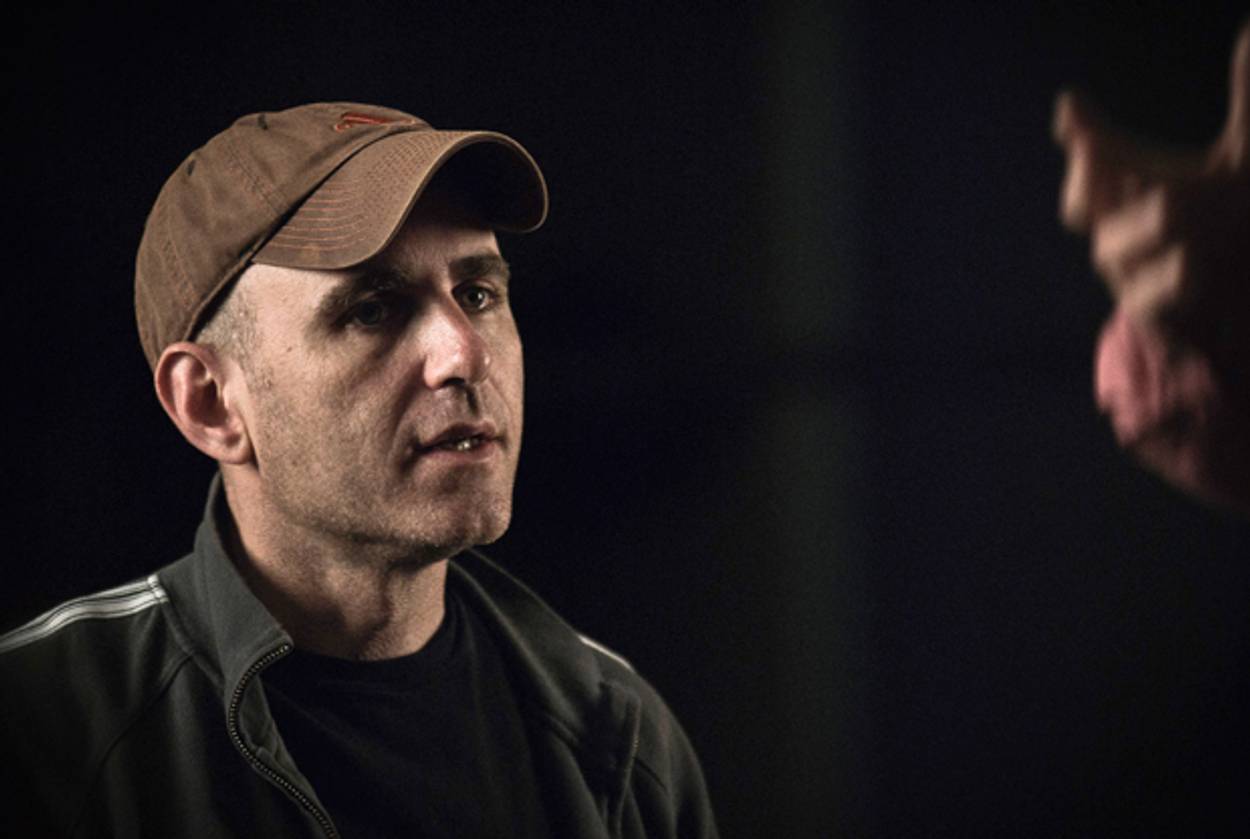
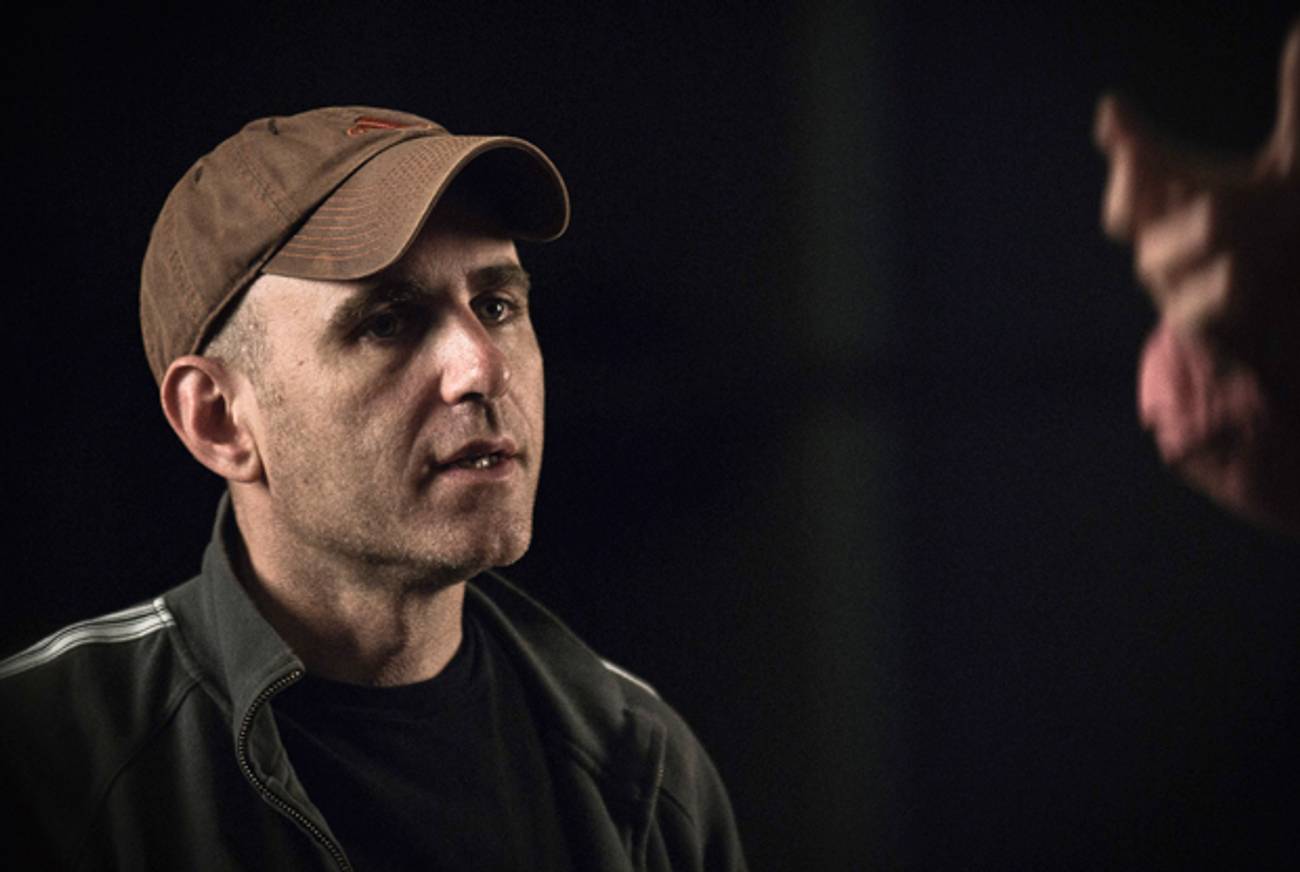
The Israeli film Footnote, which was nominated for an Academy Award last week, is the fourth feature film by writer-director Joseph Cedar. Footnote is a slice-of-Jerusalem-life, set at Hebrew University’s inbred Talmud department; it centers around a father-son rivalry for the coveted Israel Prize. Cedar’s first two films, Time of Favor (2001) and Campfire (2004), were box-office hits in Israel and were chosen by local film industry representatives to be Israel’s official selections for the Foreign Language category at the Oscars. Beaufort (2007), his third film, was critically acclaimed for its depiction of an IDF unit’s experience withdrawing from Lebanon and was also nominated for a Foreign Language Oscar.
Cedar’s latest film sparkles with intelligence and droll characterizations but is hardly the kind of movie you’d expect to break out beyond its homegrown base. Yet that is exactly what has happened, making a good argument for the more local the product, the more universal its appeal: Even before its Oscar nod, the film picked up the Best Screenplay prize at Cannes, where it was acquired by Sony Classics. It will be interesting to see whether Footnote, which opens in early March in New York and Los Angeles, lives up to its early billing—whether viewers will respond with equal enthusiasm to its quirky human drama, in which Talmud scholarship and Hebrew philology feature as much as the personal lives of the characters. One of the singular pleasures of this film is the way it delves into the aches and pains of an esoteric intelligentsia, a group who don’t usually get much play in the popular media, without becoming self-conscious in the process. Cedar moves with ease from scenes featuring academic tempests in a teapot to those that give us a glimpse of the domestic backgrounds of his two main characters. Shlomo Bar Aba, who is a well-known comic in Israel, is superb as Eliezer Shkolnik, the dour academic outsider who finally—almost—gets his moment of glory, and the other roles, including Lior Ashkenazi as Eliezer’s son, a deft academic player, and Alisa Rosen, as Eliezer’s shut-out wife, are equally well-cast. The closing 15 minutes of the film, which are choreographed as much as directed, are priceless.
Last weekend, after Shabbat was over in Israel and in anticipation of the movie’s release, I spoke on the phone with the 43-year-old director at his home in Tel Aviv. Cedar, who immigrated to Israel from New York with his family at the age of 6 and later studied philosophy and theater history at the Hebrew University in Jerusalem and NYU Film School, is married and the father of three children, ages 10, 6, and 2.
Did the response to the film surprise you, especially given its very specific Jerusalem setting?
When it was accepted to Cannes, I was in shock. It was very hard to picture this film in a competition in Cannes. I think a lot of the people there had a similar response: that it was an odd choice. Cannes gives it the kind of exposure that’s so hard to get with a film. And then Sony buying it on the first day. It’s a narrow crack a film goes through, and Cannes is a gateway. More than a film that can only take place in Israel, it’s a Jerusalem film. Even if it had taken place someplace else geographically, it’s still a Jerusalem film. Two scholars fighting over the tiniest nuance of language: That’s what Jerusalem is—or what I want it to be.
Did you have any model for the kind of film you were trying to make?
It’s a film that can’t be compared to anything. While we were preparing the shoot, we decided that the way the father character sees the world—in extreme detail, the way a philologist looks at a text—was the way we were going to look at the story. Extremely subjectively and not considering the larger context. My previous films had left me with a lot of ideas that I didn’t know how to fit into the story; that’s the way narrative films are. Because of the style of this film, its flexibility, anything that was important to the story found its way onto the screen.
What led you to cast Shlomo Bar Aba as Eliezer Shkolnik?
There’s something about him that’s reminiscent of Peter Sellers—someone people don’t know what to expect from, although Israelis know him and expect to laugh when they see him. I had him in mind when I was writing the film, but I didn’t know him and didn’t know if he could deliver. When I met him I thought he was wrong, but during the rehearsal period and during the discussion of the character it turned out that there were so many things he identified with. He’s very connected to this kind of person.
How autobiographical is the film?
It’s more my nightmare than my life. The jealousy between a father and son—the inability to be proud of your child—is something I’m afraid of more than I actually feel.
How would you characterize Eliezer’s marriage?
His wife is afraid of him. They don’t really have a relationship. Once he thinks he gets the award, things become softer. She’s so trapped with the information she has—one of the best things that happens in her life is based on a mistake. He has problems, this man. He’s not easy to live with. But everyone becomes a little softer when they feel their self-worth is confirmed. He doesn’t turn into Robin Williams, but he becomes a little easier.
Why did you set Footnote in the Talmud department of Hebrew University?
The Talmud department is an extreme version of other departments. I like the tension that exists there. No one compromises anything for anything. I spent a few months meeting a Talmud professor regularly once a week, going over different issues that exist in the department, generational conflicts, the history of the department, and in the field of Talmud study. One of the questions that interests me is whether the Talmud was edited after it was a written text or on oral deliverance? In other words, when was it first written down, before or after it was edited? The written word is inflexible, while oral tradition allows for a lot of flexibility. When we lost the flexibility is a question that is important to me in my life. I feel closer to the oral world than the written world.
How would you define yourself Jewishly?
I belong to a community that observes. But I asked the New York Times’ publicist to take out a sentence that described me on a blog as an Orthodox Jew and pro-Zionist because I don’t define myself that way. I don’t want to be labeled with those three words—Orthodoxy has some positive connotations but many negative ones. It stands for many things I oppose in an active way. I do wear a kippah most of the time and find some consistency to the times I wear it—I do so publicly, and privately I won’t. I’ve shaped my observance to my lifestyle.
Who are some directors you admire, either in America or elsewhere?
American cinema has not been very impressive in the last couple of years. There’s a Hollywood I admire but it’s not the Hollywood of today. I loved The Artist. … The Social Network is the sort of movie I want Hollywood to create: It’s smart, well-made, with real Hollywood charisma. It has a good story, great writing and acting—tells something that’s so much bigger than what’s in-between. I’m really interested in Paul Thomas Anderson. Boogie Nights is one of the most complete films that exists. It has what a great film needs to have.
How would you like people to be affected by your film?
I’m happy if they go into the film. The way they leave is their problem.
Daphne Merkin, a contributing writer at the New York Times Magazine and a contributor to the TLS, The Times Book Review, Bookforum, and Departures, teaches writing at Columbia University. Her latest novel, Twenty-Two Minutes of Unconditional Love, will be out in June, 2020.