
The Other League
The short-lived American Football League, merged into the NFL after Super Bowl IV, invented the modern media spectacle that is pro football. And three Jews invented the show that was the AFL.
February 03, 2011

RemembertheAFL.com
RemembertheAFL.com
RemembertheAFL.com
This Sunday, you will watch Super Bowl XLIX. You will watch because the Super Bowl is among the American religion’s biggest holidays. You will watch because professional football is the national pastime (last Halloween, more viewers watched a regular-season National Football League game than a simultaneous Game 4 of the World Series). You will watch because at some point during the game, Aaron Rodgers of the Green Bay Packers or Ben Roethlisberger of the Pittsburgh Steelers will take the snap, drop back to give his receivers precious seconds to zoom down the field, maintain focus even as the pocket collapses, pat the ball once and chuck it 40 yards as one of the fastest men alive runs to meet it. For a little under three seconds, the ball will travel through the air, hovering onscreen against the backdrop of the blurred masses, and more than 100 million Americans will hold their breath, waiting to see what happens.
None of this would exist—pro football’s astounding popularity and financial success, the Super Bowl, the Hollywood-like narratives and Hollywood-like stars, and even the glorious deep bomb—if it were not for the American Football League, or AFL, which disappeared more than 40 years ago, only 10 years after its birth. The AFL’s story is a quintessentially American tale of a group of outmanned, outcast insurgents working on the margins, forced to break with the old way of doing things and in the process creating a brasher, more exciting version of the mainstream—a mainstream that then remade itself in the insurgents’ image.
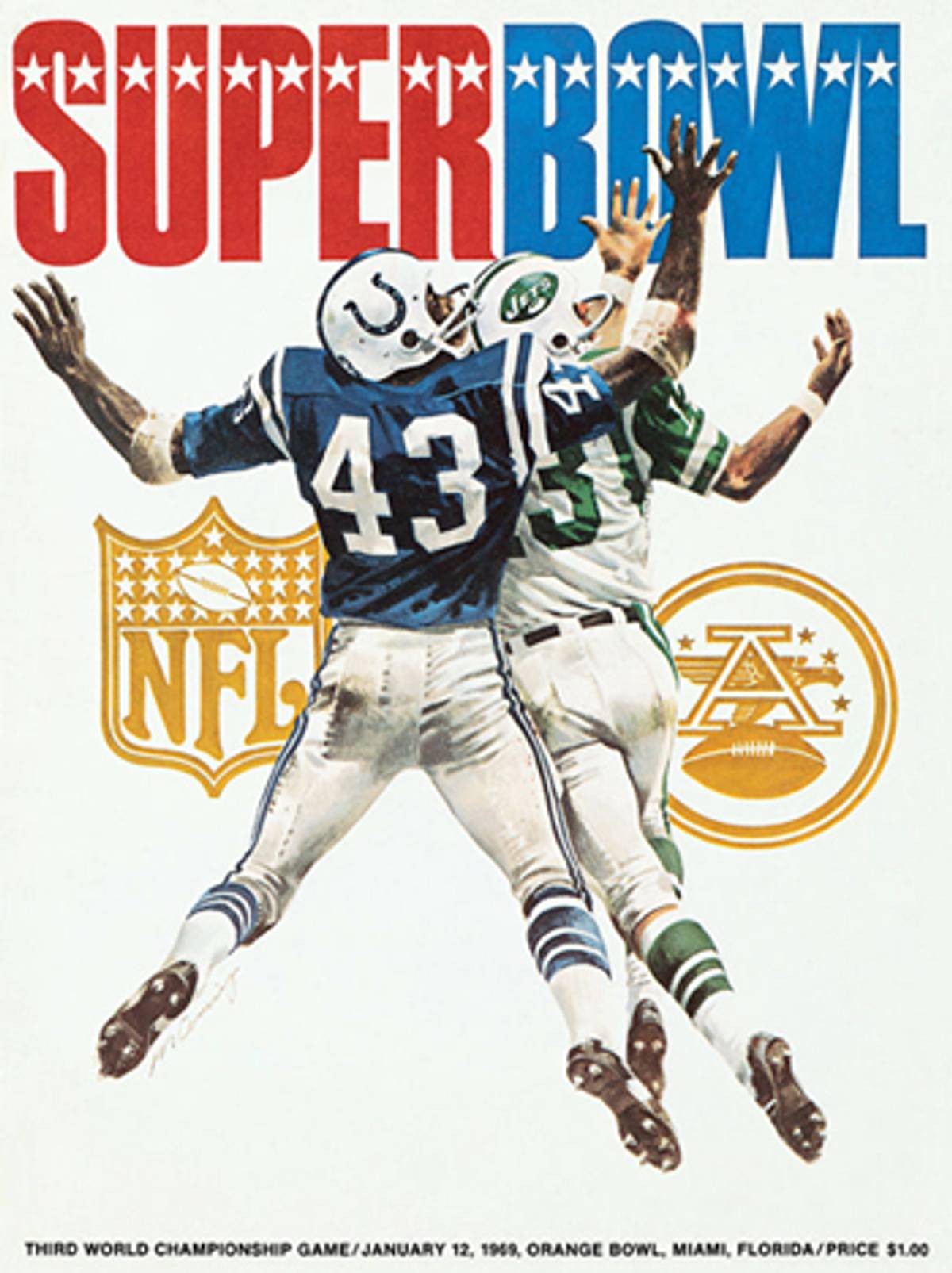
And Sid Gillman, Sonny Werblin, and Al Davis—three Jewish men—were among the AFL’s boldest and most creative innovators, and through the AFL had among the greatest impacts on the shape, success, and direction of the game you will watch on Sunday night.
The AFL began because 27-year-old Lamar Hunt, the son of independent oil baron H.L. Hunt, wanted to own a football team and the 12-team NFL refused to expand. So Hunt found seven like-minded entrepreneurs and started his own league, which played its first games in the fall of 1960. (Jeff Miller’s oral history, Going Long, the NFL Films documentary Full Color Football, and especially Michael MacCambridge’s superb history of pro football, America’s Game all tell the story well.) Over the next decade, the AFL slowly gained enough respectability—and presented enough of a threat—that the NFL agreed to absorb it. In January 1970, Hunt’s team, the Kansas City Chiefs, won the AFL and then defeated the NFL champion Minnesota Vikings in Super Bowl IV—and then the AFL ceased to be. Its teams were absorbed into the American Football Conference of the NFL.
Then the NFL, having conquered the AFL, was in turn conquered by it. The story of how the AFL—and particularly Gillman, Werblin, and Davis—remade football will resonate with those who know how Gershwin remade American popular music, or how Bellow remade the American novel.
At the end of a disappointing 1959 season, the NFL’s Los Angeles Rams—general-managed by a young comer named Pete Rozelle—fired Coach Sid Gillman, making him the logical choice, in 1960, to lead L.A.’s brand-new AFL franchise. Gillman was the Chargers’ coach (they soon moved to San Diego) for the entirety of the AFL’s 10-year existence and was, as at least three different people I talked to called him, “the father of the offensive passing game.”
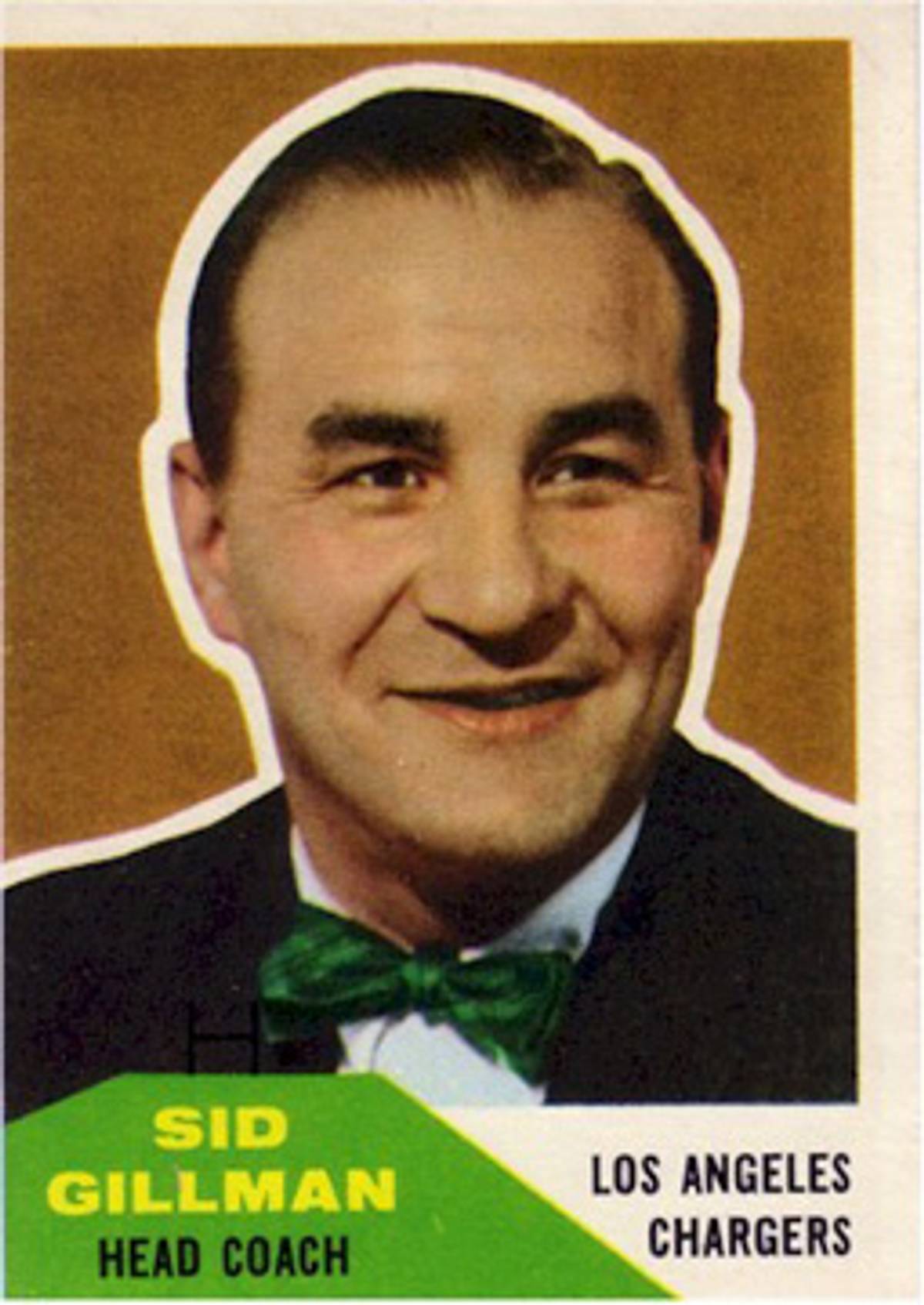
In the 1950s, football offenses overwhelmingly handed the ball off. Gillman was typical in this regard: “He ran the ball an extraordinary amount even among NFL coaches,” the football historian Michael MacCambridge says. However, arriving in the AFL, Gillman noticed a few things. First—at least at its outset—AFL defenses were not quite up to the NFL standard and frequently played man-to-man coverage. Second, the actual ball was a Spalding J5-V, which was a quarter of an inch longer and slimmer than the Wilson model in the NFL, which made it slightly easier to throw. Finally, Gillman found an excellent set of toys to play with: quarterback Jack Kemp, an NFL cast-off who, like so many others, found the second act of his career in the nascent league (he would find his third act in politics, serving in Congress and eventually becoming Bob Dole’s running mate in the 1996 elections); running back Keith Lincoln; offensive tackle Ron Mix, a future Hall of Famer known as “The Intellectual Assassin”; and, most important, Lance “Bambi” Alworth, a wide receiver out of Arkansas with exceptionally soft hands. Most of all, Gillman saw a new league, where innovation would be more welcome.
So Gillman decided to switch things up offensively. “The field is 100 yards long and 53 yards and two-thirds inches wide,” Gillman is shown saying in Full Color Football, “and we decided we were going to use every inch of it.” Alworth could run deep and catch what was thrown at him, creating a potential for big plays and, just as important, a defense that would be stretched too thin guarding against the long pass to successfully defend the run and shorter passes—many of which, in another Gillman innovation, were caught by running backs.
“If you look at today’s game, Sid Gillman still has a tremendous impact,” says Ron Jaworski, the ESPN analyst who as a quarterback—and with Sid Gillman as his quarterbacks coach—led the Philadelphia Eagles to the 1981 Super Bowl. “Gillman was a vertical stretch guy who believed in attacking down the field, as well as the horizontal stretch, sideline-to-sideline.” The sport played today is dominated by the pass and by quarterbacks who routinely throw 4,000 yards in one season (including Roethlisberger and Rodgers, Super Bowl XLV’s featured QBs). While prime credit for this arguably goes to Bill Walsh, the legendary San Francisco 49ers coach who created the West Coast Offense, which spread offensive players across the field, Gillman’s innovations and emphasis on passing came first. “This notion that you hear associated with Walsh, that you use the pass to set up the run, the seeds of that were in the Chargers’ system,” MacCambridge argues. It is no coincidence that the first quarterback to throw for 4,000 yards did so in the AFL and that the quarterback to throw three of the next four 4,000-yard seasons did it for the Chargers.
That accomplishment belongs to Hall of Famer Dan Fouts, who played under coach Don Coryell; his brilliant offense, “Air Coryell,” extended Gillman’s ideas about deep routes and pass-catching running backs. “They shared ideas and concepts, and I think what they shared more than anything was a fearlessness about the passing game,” Fouts, now a CBS commentator, tells me. “When you think of the American Football League, you think of men like Sid Gillman, and the wide-open style that the league played, and how entertaining it was.”
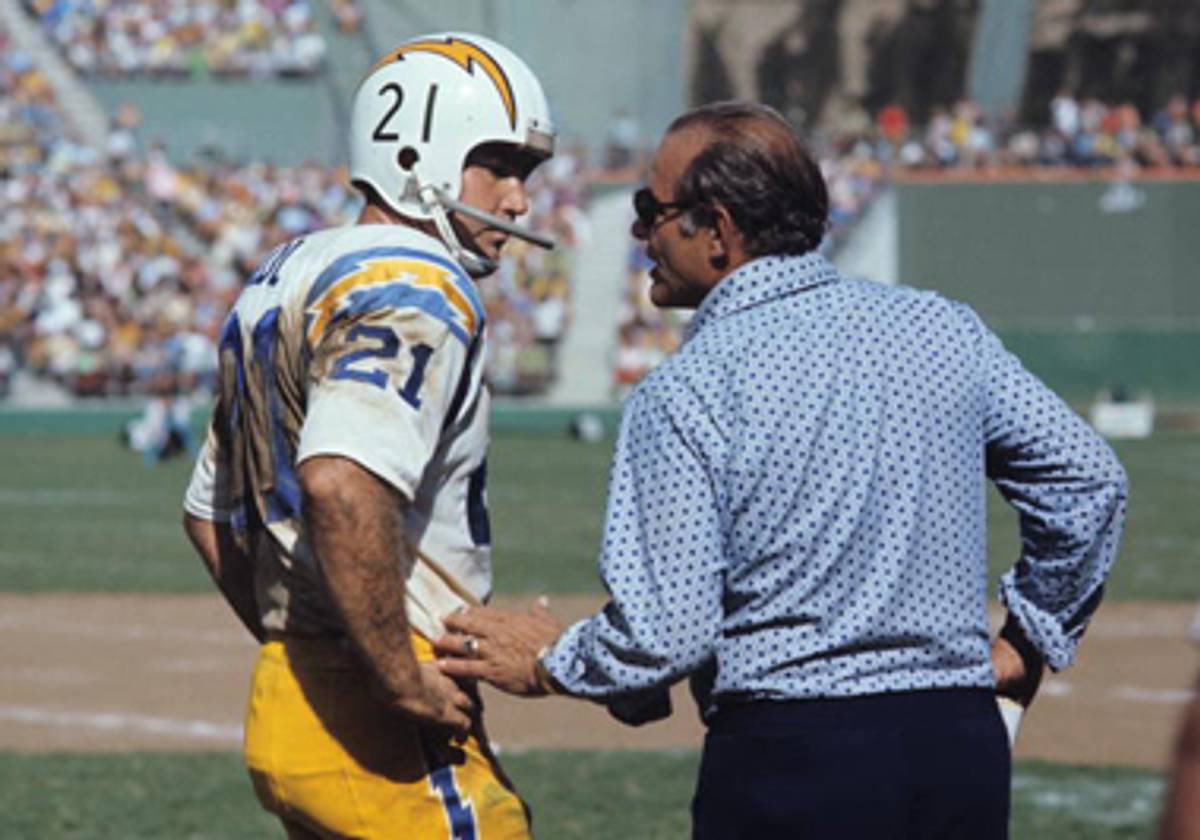
In the AFL, necessity was the mother not only of invention but of tolerance. Most famously, when it became clear that New Orleans was neither big nor easy on the prospect of black players competing in the 1964 AFL All-Star Game, the squads refused to play, and, a day later, the League moved the game to Houston. But this proud moment was possible only because from the outset several teams—and most notably the Chargers—were unafraid of putting 10 or 15 black players on their squads at a time when American sports had only recently integrated; Gillman and his chief scout, a young Al Davis, placed particular emphasis on recruiting at historically black colleges, which the NFL ignored. Additionally, in training camp, Gillman assigned rooms by position, meaning the extraordinarily rare phenomenon of whites and blacks sharing bedrooms. “Sid told me at the time that’s why he was doing it,” says Ron Mix, Gillman’s offensive lineman.
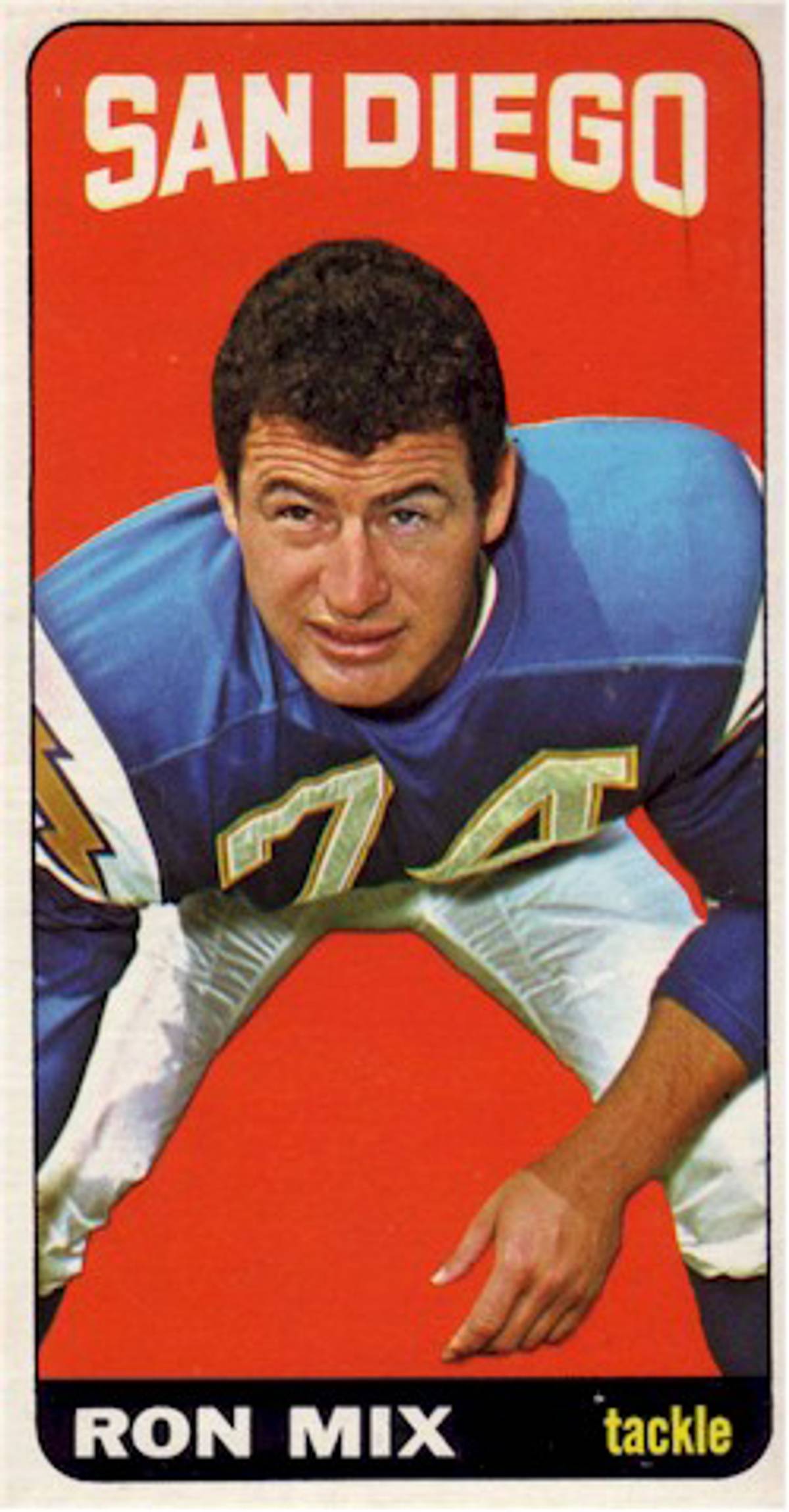
Mix grew up in Boyle Heights, in Los Angeles, rooting for Gillman’s Rams. “The high school I went to, there might’ve been two Jews there—my brother and I,” Mix recalls. “And there were all these misconceptions and stereotypes about Jews. It was good to see somebody who went against that stereotype.” (Mix was also the top draft choice of the NFL’s Baltimore Colts. According to Mix, after he countered their initial offer with a higher one, Colts owner Carroll Rosenbloom refused. A few years later, Mix heard that Rosenbloom, a Jew, had remarked: “You know, if I’d known Mix was Jewish, I’d have signed him.”)
Gillman’s Chargers won the Western Division in five of the AFL’s first six seasons, but only in 1963 did his team win the championship, in a game that showcased Gillman’s offensive genius to the fullest. Gillman’s game plan used motion, well-timed runs, and unpredictable play-calling to turn the opposing Boston Patriots’ blitz-happy defense against itself. The strategy was titled “Feast or Famine”: If it failed, the Patriots’ linebackers would be feeding off the Chargers’ backfield. But instead, the Patriots starved. They’d expected passes, and, jiu-jitsu-like, Gillman took those expectations and ran like hell on them. Lincoln, the star running back, gained an astounding 206 yards on the ground. The Chargers routed the Patriots, 51-10. The Chargers’ rings read “World Champions,” but Gillman wanted confirmation of that honorific, and, as recounted in MacCambridge’s America’s Game, decided to ask then-NFL commissioner Pete Rozelle for the right to play the NFL champ that year, the Chicago Bears.
“PETE—EVEN POPE JOHN RECOGNIZED THE OTHER LEAGUE,” Gillman telegraphed Rozelle.
“SID,” responded Rozelle, “YES BUT IT TOOK HIM TWO THOUSAND YEARS.”
It was 1962. David A. “Sonny” Werblin, an MCA talent agent who managed Jackie Gleason, Benny Goodman, and Johnny Carson, was throwing Joe Foss, a former fighter pilot and the AFL’s first commissioner, a birthday party at New York’s 21 Club. Harry Wismer, the unliked, egotistical charter owner of the AFL’s New York Titans, was there; Wismer ran the floundering franchise out of his apartment and mostly into the ground. As Foss recounts in Going Long, as the evening progressed and the drinks flowed, Wismer called Werblin a kike, and Foss had to prevent the two men from coming to blows. Werblin, whose football experience mainly consisted of playing center at his Brooklyn high school, launched his parting shot: “Someday, I’m going to own your team!” “Someday” turned out to be “in a few months.”
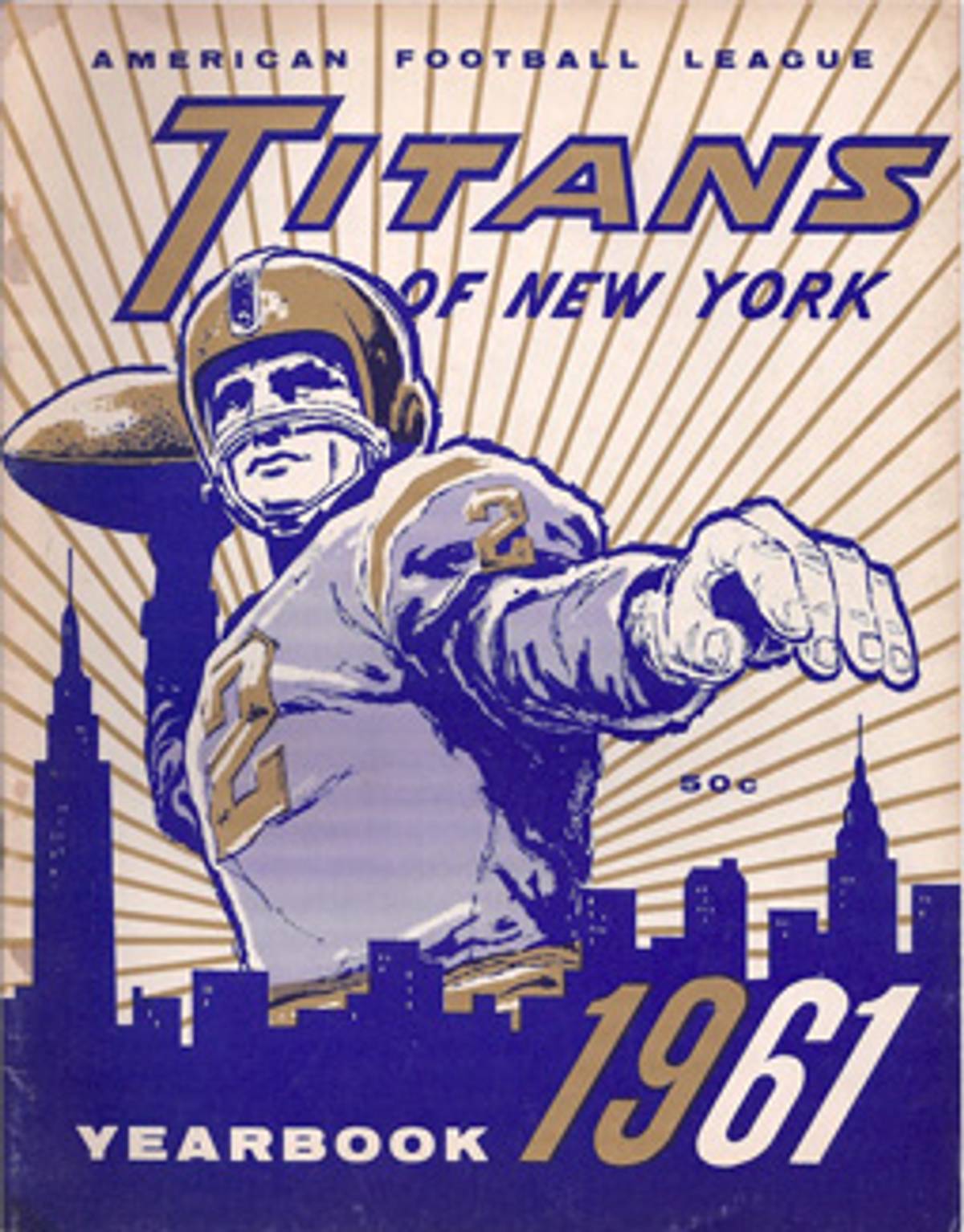
In addition to being the country’s financial, entertainment, and media capital, in the early 1960s, New York City was arguably its pro football one, too. The New York (football) Giants faced little competition for fans from college teams (still doesn’t, in fact); the team’s owners, the Mara family, was sturdy and well-respected (still is, in fact); and they played their home games at Yankee Stadium, the fortress of the most glamorous team in the world (this is no longer true, because in the ’70s Werblin maneuvered to move the team to New Jersey). They were also perennial contenders. In other words, the AFL needed a New York franchise, and it needed that franchise to succeed. Just look at the name: Titans are bigger than giants. But if the Chargers were the class of the early AFL, the Titans were flunking. Sustained for a time by sweetheart loans from other AFL owners, eventually Foss sold the team out from under Wismer only months before Wismer filed for Chapter 11. The buyer? A five-man group led by Werblin.
Werblin quickly made a number of changes, and they were in exactly the loud, brash tone of the rest of the new league. Out went Sammy Baugh, the legendary quarterback but mediocre head coach; in came Weeb Ewbank, who had had great success coaching the Colts. Out went those lousy uniforms; Werblin was born on St. Patrick’s Day, so his team’s new colors would be green and white. Out went the team’s home stadium, the crumbling Polo Grounds; in came Shea Stadium, home of the brand-new Mets. You know what rhymes with Mets? The team’s new name: The Jets.
But this was only the beginning of Werblin’s contributions to the league. Next, he negotiated a new television contract with NBC for the league—Werblin’s leverage concerning Carson no doubt helped—which put the eight (soon to be 10) AFL franchises on financial footing much closer to those of the 14 NFL franchises. “At that particular point, the AFL was engaged in a fairly acrimonious situation with the NFL,” Bob Moore, the Chiefs’ official historian, says. “For Werblin to come in and negotiate the contract with NBC was one of the key pieces of the AFL’s existence.”
Werblin’s most consequential move may seem on its face a personnel decision, but it was in fact a TV talent agent’s masterstroke. Going into the 1965 draft, the University of Alabama’s quarterback, Joe Namath, was not the top college prospect—that was John Huarte, Notre Dame’s QB. On top of that, Namath was known to have bum knees and therefore the potential for a short career (which is exactly what happened). However, what no one had like that Alabama QB was charisma. That’s what Werblin saw, and that’s what he knew he needed most. “I believe in the star system,” he told Sports Illustrated in 1965. “It’s the only thing that sells tickets. It’s what you put on the stage or playing field that draws people.” Werblin was determined to sign Namath, if only for the draw.
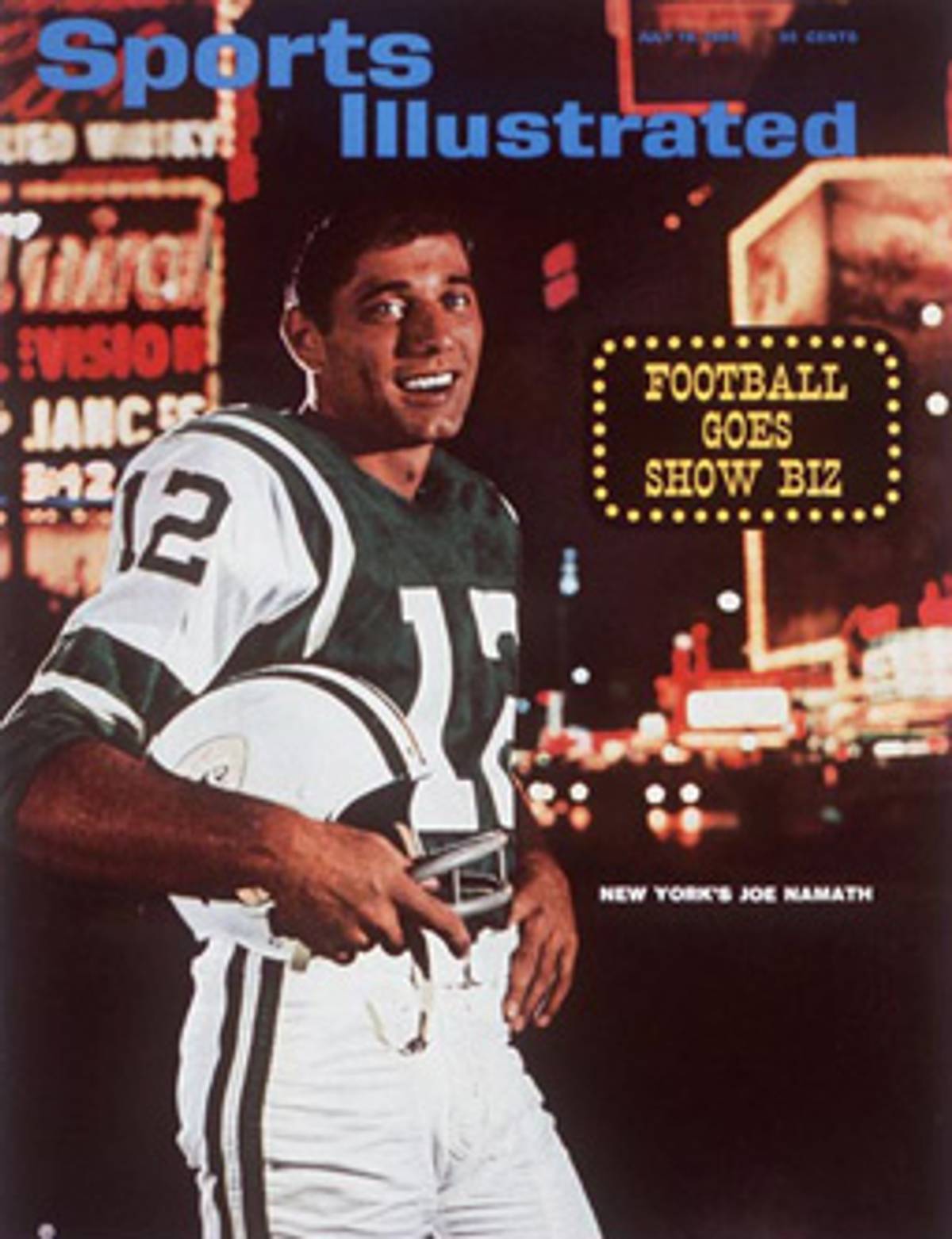
The NFL team that drafted Namath, the St. Louis (football) Cardinals, offered him $200,000. That equaled the signing bonus Namath eventually got from the Jets. All told, Namath’s contract was worth $427,000 (including the value of a Lincoln Continental), an amount so huge it was its own story—which was half of why Werblin did it. “I don’t know whether you’ll play on our team or make a picture for Universal,” Werblin told his new quarterback, according to Sports Illustrated (just in case, Werblin also signed Huarte, Notre Dame’s Heisman Trophy-winner). In fact, Namath was a certain kind of gridiron genius, the first quarterback to throw for 4,000 yards in a season and the leader of the Jets team that won Super Bowl III. But just as important for the AFL and the future of professional football, he was Broadway Joe: football’s first mass media-age star.
The Jets quickly became attendance kings, and other AFL teams enjoyed their strongest fan showings whenever the Jets were visiting. Namath’s youth, casual attitude, and sex appeal helped associate the AFL, already football’s alternative league, with the ’60s counterculture. “A lot of people became AFL fans just to bug their fathers,” says Ange Coniglio, who runs the fan website Remember the AFL. (Joe Namath had the honor of being the only athlete to appear on Nixon’s Enemies List.) Above all, the Namath signing and the NBC deal—both Werblin’s doing—signaled that the AFL was not going away, which meant the NFL had to get serious about a merger.
“You’re not a wartime consigliere,” Michael Corleone tells his adopted brother, Tom, in The Godfather, pushing him aside. One imagines a similar conversation taking place among the AFL owners in April 1966, when, sensing war on the horizon, they replaced jovial commissioner Joe Foss with Al Davis, then the head coach and general manager of the Oakland Raiders. Among Davis’ first moves was to demand a new office in New York. “I want to be on the top floor of a building,” Joanne Parker, a former staffer, recalls Davis insisting. “I want the entire floor, and I want the elevator to be such that nobody else can get to that floor.”
Think of the person you know who has the biggest chip on his or her shoulder. Then add football genius, paranoia, and overtly Machiavellian tendencies. Finally, multiply the size of the shoulder-chip by 50. I ask Glenn Dickey, who covered Davis as the San Francisco Chronicle’s Raiders beat writer in the late ’60s, where Davis got his me-against-everyone mentality. “We always wondered that, too,” he says. While the NFL’s Pete Rozelle was firmly establishment and Lamar Hunt, a child of privilege, was a rebel purely out of necessity, Davis was—is—a rebel by nature. “He’s always had something in him that made him feel like an outsider,” says Dickey, “and he enjoyed that role.”
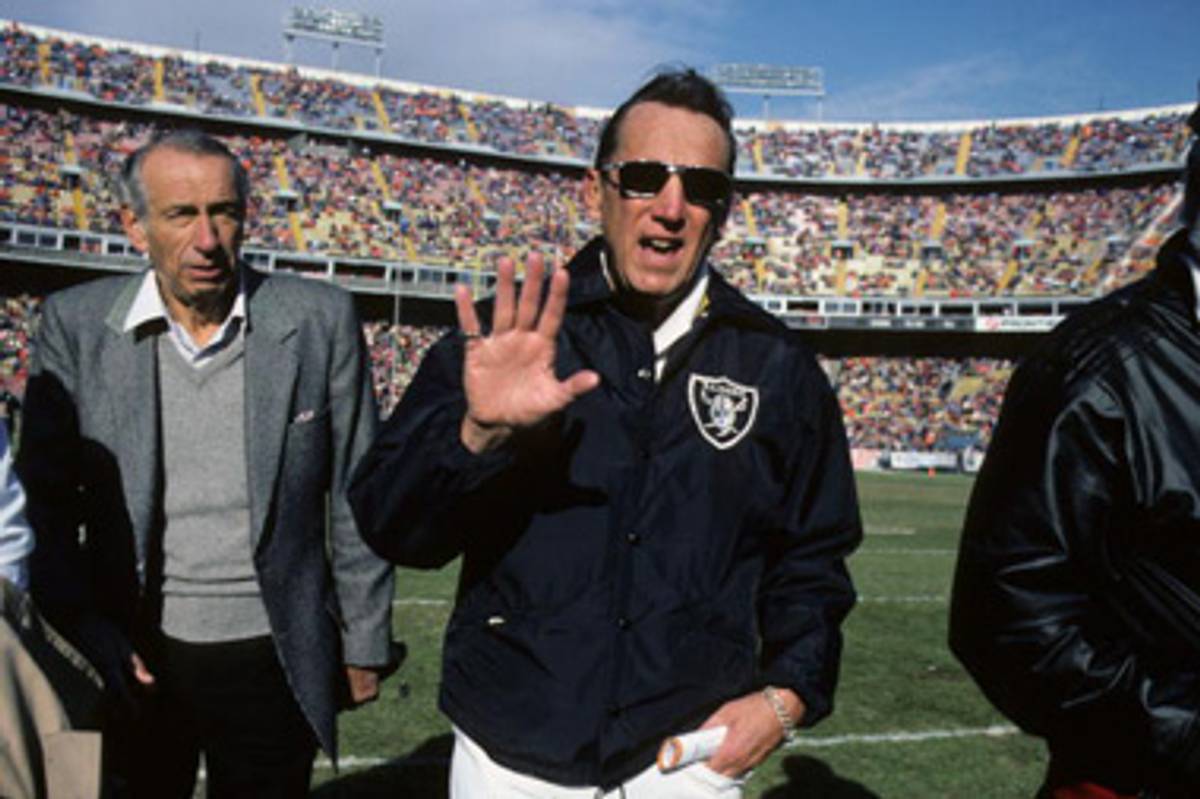
Born in Brockton, Massachusetts, he attended Brooklyn’s Erasmus Hall High School and then Syracuse, where the coach did not give him the playing-time he felt he deserved—forging, or at least adding to, his grudge against the universe. His military affectations were refined while coaching at The Citadel; he later coached at the University of Southern California and for Gillman’s Chargers before heading north, to Oakland. “It’s dangerous to put Al in this group of AFL guys,” MacCambridge warns me. “In so many ways he is an American original.” He was born on July 4, 1929, and is known for two three-word phrases that seem applicable to any life situation: “Commitment to excellence” and “Just win, baby.” (There is a splendid third, lesser-known quip of his: “Anything good in this life is worth cheating for.”) Today, at 81, he is still the principal owner of, as he always pronounces it in full Brooklyn splendor, “the Raiduhs.”
Earlier than any other franchise, The Raiduhs stood—and continue to stand—for something beyond their location, their colors (a menacing silver and black), and whoever happens to manage, coach, and play for them at any particular time. They were the first team with an identity in a league that now relies on such identities to market itself. And what is the Raiders’ identity? The team with a chip on its shoulder. When NFL Network counted down its “Top Ten Feuds,” number one was “Raiders vs. the world.”
Part of Davis’ brilliance was football. In his first year as head coach, he turned a 1-13 team into a 10-4 one. In 1966, back from his brief stint as the AFL’s second and final commissioner—he returned as general manager, not coach, and he picked up his first ownership stake then—he initiated Bill Walsh’s coaching career, putting him in charge of the running backs. He added to Gillman’s passing game—he was a particular fan, says Dickey, of Gillman’s “East Formation,” in which two receivers line up to the quarterback’s right (which at the time was unusual)—and the Raiders, even more than the Chargers, became known as the top vertical passing team, winning the 1967 AFL Championship with QB Daryl “The Mad Bomber” Lamonica. The Raiders proudly built an identity as being tougher than everyone else. “There was a philosophy in the ’60s that if a player was too idiosyncratic, that player could not help the team,” MacCambridge says, citing anecdotes of coaches like Paul Brown and Vince Lombardi chastising players for missing assignments right after they had scored touchdowns on electric, improvisational plays. “Davis was among the first of football men, as a coach and an executive, to recognize that was hogwash.”
As AFL commissioner, Davis did not strike the deal that led to the historic merger of the two leagues. Instead, he lured the NFL into war and then proved a formidable foe, creating a climate where the non-psychopaths could move in, strike a deal, and make the peace.
There was an unwritten agreement that while the two leagues would hold their own drafts and compete over college prospects, teams would not poach veteran free agents from the other league. That understanding was shattered one month after Davis became commissioner when the Giants—frightened by Werblin and Namath’s resurgent Jets across the river—signed Pete Gogolak, the star soccer-style placekicker of the AFL’s Buffalo Bills. Davis immediately perceived Gogolak for the Fort Sumter he needed, and he quickly counterattacked, getting AFL teams to go on a spending spree for NFL free agents. Prowling his penthouse office, muttering things like, “The guerrilla wins if he doesn’t lose,” Davis targeted three types of players: the stars, because they were stars (Bears tight end Mike Ditka signed with the AFL’s Houston Oilers, though never got the chance to play for them); the quarterbacks, because they were quarterbacks; and—this is the best—Los Angeles Rams, because he wanted to get under Rozelle’s skin. (Rozelle had started out in the Rams’ publicity department and been their general manager.)
In this atmosphere, Rozelle, Lamar Hunt, and Tex Schramm—the influential owner of the NFL’s Dallas Cowboys—struck the deal that merged the two leagues behind Davis’ back. After the 1966 season, the leagues would stage a championship game between the two leagues’ winners and then a common draft; inter-league exhibition games would commence before the 1967 season; and the total merger would occur before the 1970 season. Rozelle would be commissioner of the two leagues immediately. An aide had to tell Davis what had happened mere hours before the merger was announced. His response: “Do you remember Yalta?”
The Super Bowl is super because, for four seasons, it featured not the two champions of artificial conferences within one organization but the best teams in two distinct leagues that truly hated each other. Vince Lombardi’s Packers handily beat Hunt’s Chiefs and Davis’ Raiders in the first two big games, confirming the public’s sense of the NFL’s superiority. But in Super Bowl III, the Jets, 19-point underdogs against a Colts team that some declared to be the best ever—and with Namath, famously, “guaranteeing” victory—stunned the world with a 16-7 win. MacCambridge reports that Rosenbloom, the Colts’ owner, was inconsolable afterward, even as Rozelle tried anyway. “Don’t worry,” he said, “this may be the best thing that ever happened to the game.”
Today’s NFL teams are unafraid to throw the deep ball and let their quarterbacks escape the pocket, as Gillman and other AFL coaches devised for their offenses. On defense, Steelers safety Troy Polamalu and Packers cornerback Charles Woodson at times freelance outside the system, in ways that would make Al Davis proud, if only they weren’t doing it on teams that aren’t the Raiders. And at least as many stories will have been written about Roethlisberger’s off-the-field troubles and Rodgers’ humility as about their passing prowess, because, thanks to Werblin and Namath, quarterbacks today are stars like any other stars. And it’s all happening at the Super Bowl, the biggest and loudest spectacle in the world. The AFL didn’t disappear. It assimilated.
Cover image from RemembertheAFL.com.
Marc Tracy is a staff writer at The New Republic, and was previously a staff writer at Tablet. He tweets @marcatracy.